Inguinal Hernia: A Groin Bulge Mistaken for a Muscle Strain
A 30-year-old woman in Ningbo, Zhejiang, finished a sweaty session at the gym and found a soft lump the size of a ping-pong ball at the top of her thigh. She thought she had pulled a muscle. Her abdominal wall had actually given way.
Ms Ding (a pseudonym) had signed up for the gym because her body had felt much weaker since she gave birth. She wanted to build herself back up.
One session, she took a deep breath to brace for a lift, and a sharp pain stabbed through the top of her thigh. A soft bulge rose under her skin. She assumed it was a strain and ignored it. But over time the lump grew, and when she picked up her child it hurt badly enough that she could not straighten her back. She also had frequent bloating.

Then one evening, she finished three sets of dumbbell work and tried to stand up. Pain erupted in her abdomen, and the ping-pong ball would not go back in, no matter how hard she pushed. Her coach was frightened and rushed her to hospital.
A CT scan of her abdomen showed a hernia. Her doctor explained: "This is a typical inguinal hernia. There is a gap in your groin area, and your ovary slipped through it and got stuck under the skin. That is the lump you can feel."
Surgeons repaired the gap and put the ovary back through keyhole (laparoscopic) surgery. When she woke up, she felt for the lump. It was gone.
Postpartum mothers are one of the groups in which inguinal hernia is most common, the doctor said. For a full year after delivery, the whole abdominal wall stays very fragile. Recovery of diastasis recti — the separation of the abdominal muscles — depends on rest and healing, not on forcing the muscles to train.
"Postpartum muscles are slack," the doctor said. "Forcing dumbbells, bench presses or heavy lifts that raise abdominal pressure is like asking a paper wall to carry the load of a brick wall. The wall breaks." Every drop Ms Ding sweated looked like getting stronger, he added, but she was really digging a pit for her own body.
Where exactly is the groin?
In plain terms, the groin is the border zone where the trunk meets the thigh. It hides in the folds at both sides of the lower belly, at the top of the legs, shaped like a diagonal groove — the area people call the "V-line."
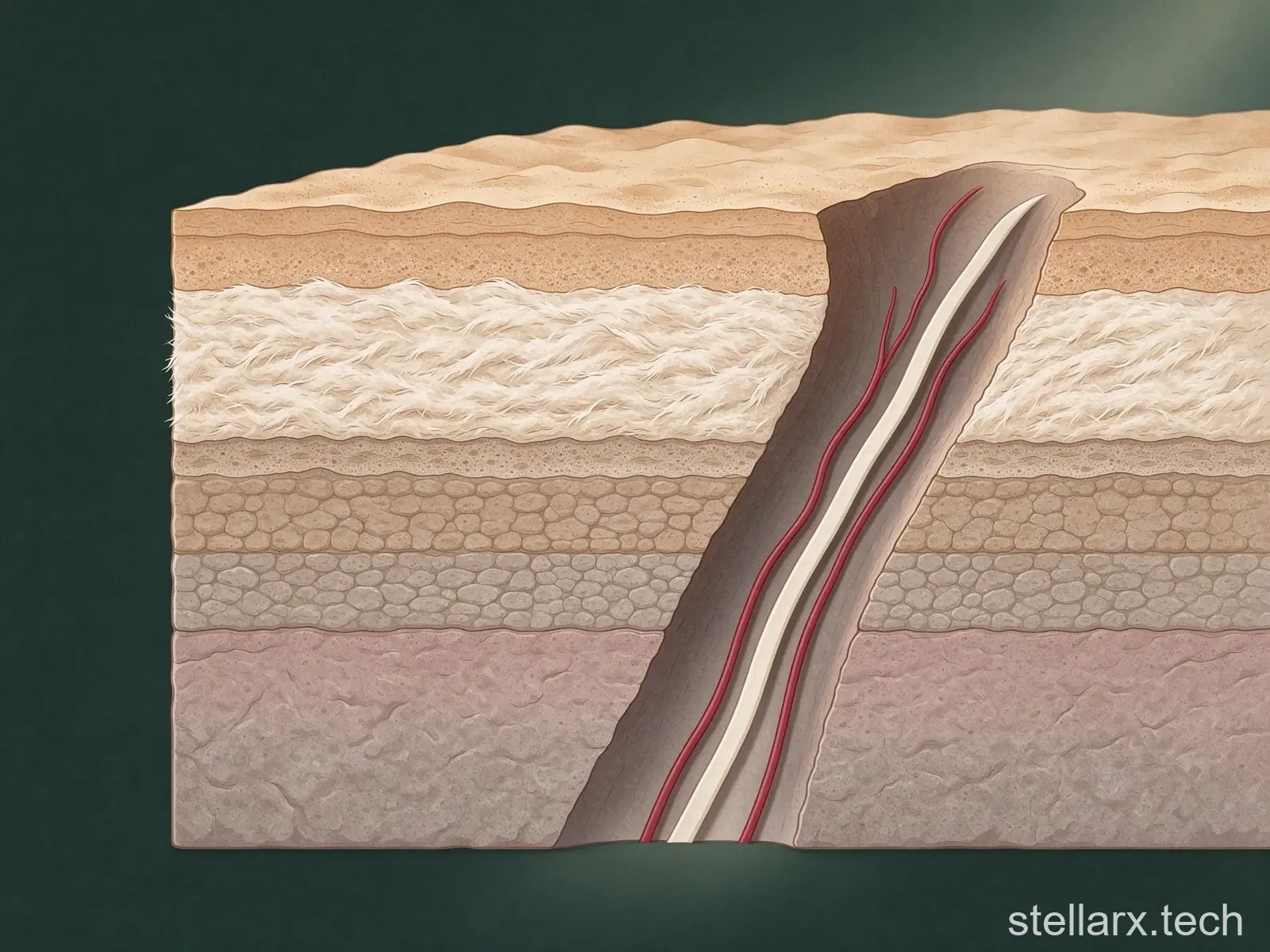
This spot is a transport hub for the body. The blood vessels and nerves of the abdomen pass through it, and so do the spermatic cord in men and the round ligament of the uterus in women, on their way to the thigh or the pelvis. Because it has to make room for all these structures, the abdominal wall at the groin is thinner than the rest of the belly from birth — like a brick wall missing a few bricks, which sets up trouble later.
Is a hernia actually "gas"?
No. A hernia is not a pocket of gas. It is an organ from the abdominal cavity — usually the bowel or the omentum — slipping through a weak point or defect in the groin and escaping to the surface, where it forms a lump you can see and feel.
Because the contents are usually small intestine, and because squeezing the lump sometimes produces a gurgling sound like gas bubbling through water, and because it appears when you stand and often disappears when you lie down, the condition is also known colloquially as "small-intestine gas."
How does an inguinal hernia form?
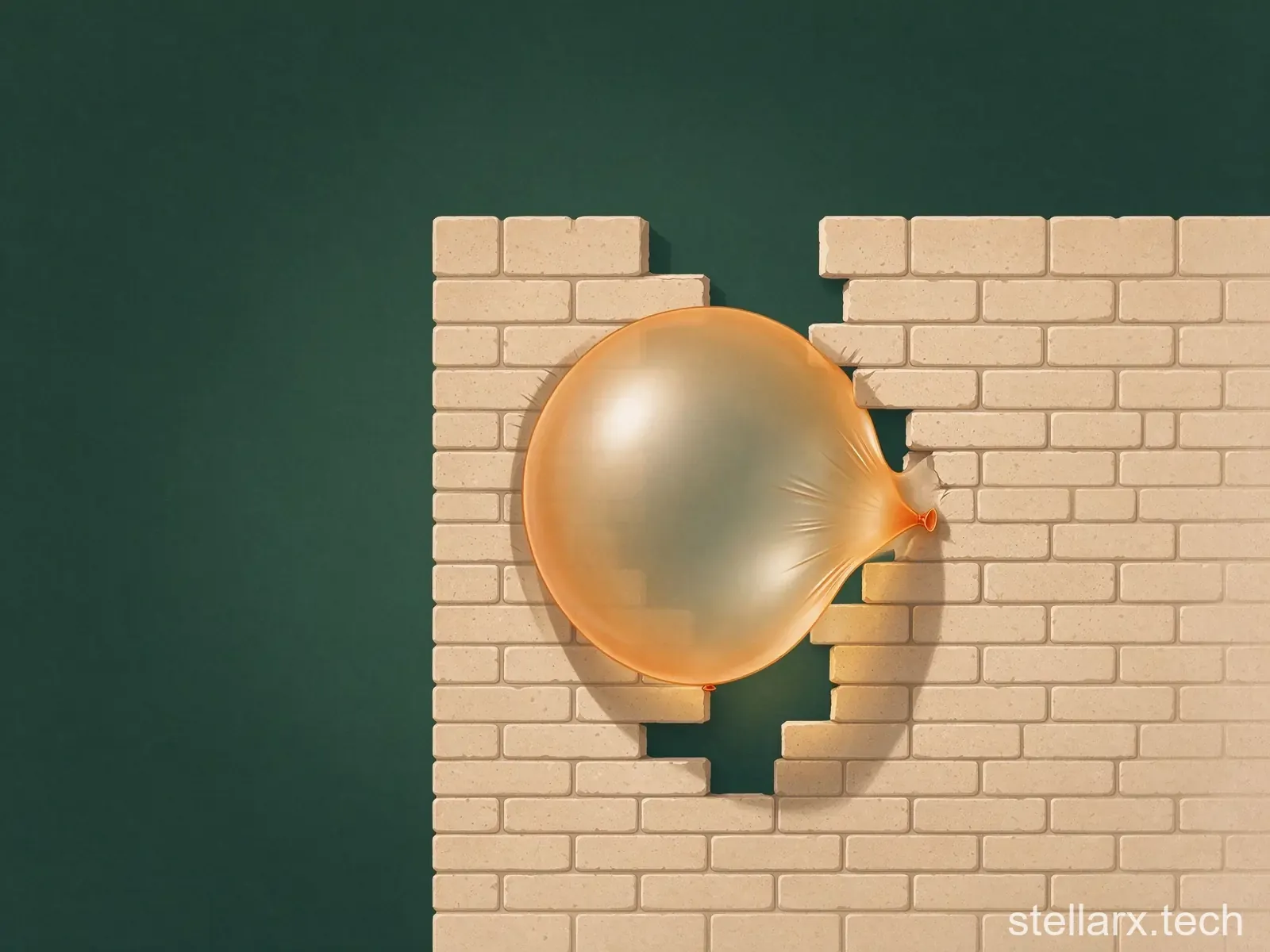
It takes two conditions acting together. First, the wall itself is not strong enough — the underlying factor. Second, the pressure inside the abdomen keeps rising — the trigger.
The wall may be weak because it developed thin, or because age and obesity have made the abdominal muscles slack, or because of a pathological cause such as earlier surgery that left the wall thinner. The pressure may rise because of chronic coughing, long-term constipation, trouble urinating, lifting heavy objects, or pregnancy. All of them push on the organs the way blowing up a balloon does, until something gets forced out through the weak point.
What does an inguinal hernia feel like?
The most typical sign is a lump in the groin that appears and disappears. It turns up when the person stands, coughs, or strains hard, and it often slides back and vanishes when the person lies down and relaxes. Early on there may be only a mild dragging or heaviness, with little effect on daily life.
What happens if you leave it alone?
Do not assume it will heal by itself. Left alone, the hernia sac can keep getting bigger. The greater danger is that the contents become stuck at the defect and cannot return — an incarcerated hernia. The pain suddenly gets worse, the lump turns hard, and it cannot be pushed back, which creates a vicious cycle. If the incarceration is not relieved in time, the bowel can become ischaemic and die, and it can even cause a bowel obstruction or peritonitis, both life-threatening.
What actually fixes it?
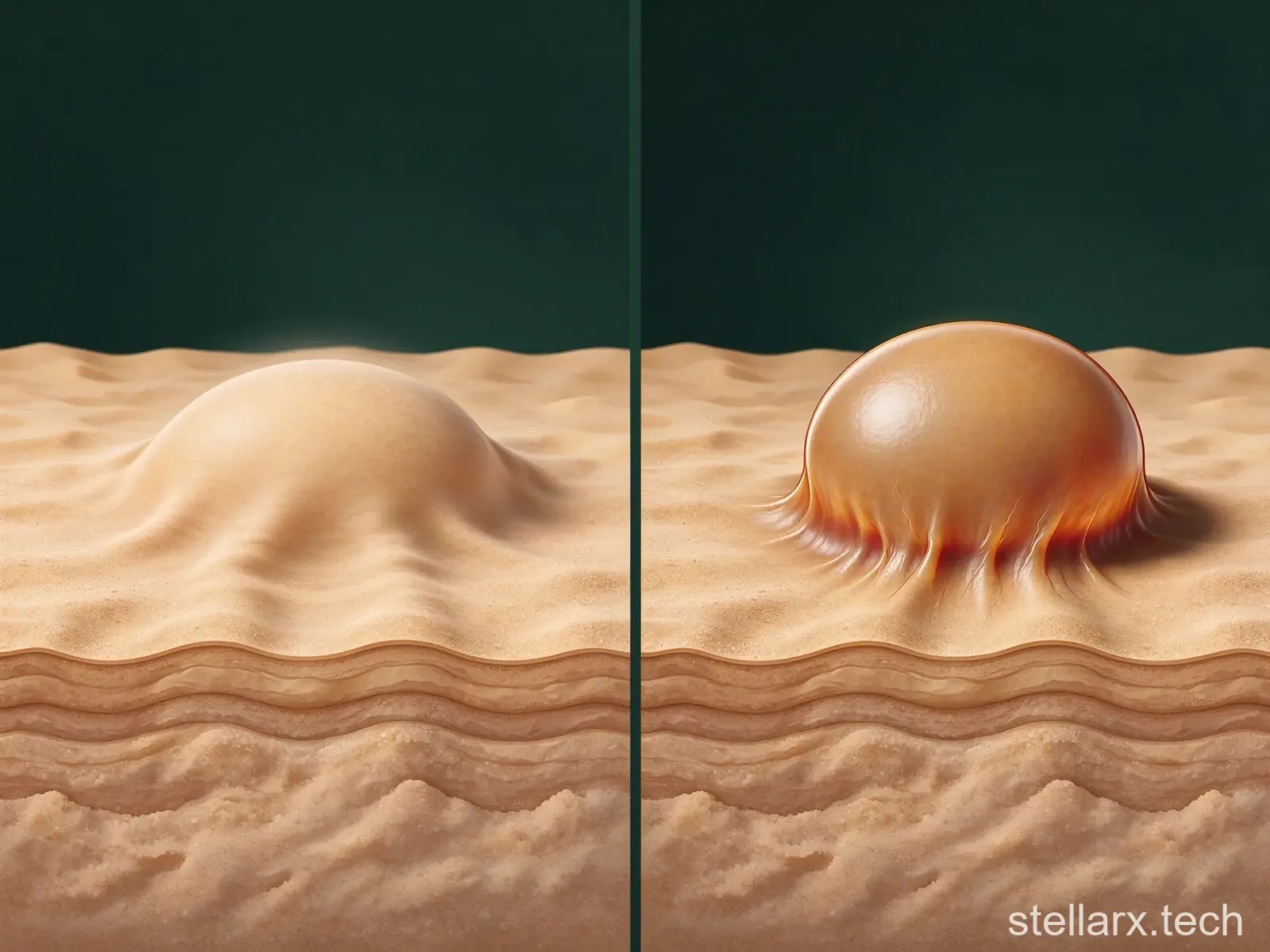
If a hernia is suspected, get assessed early. Surgery is currently the most reliable treatment for inguinal hernia in adults. In infants, a hernia before the age of one can be watched closely; if it is still there after the first birthday, the child needs further assessment.
A gap in the wall does not close because you rested. It is a mechanical defect, and it has to be repaired.
If you want to see the tissue that travels through that gap, you can look at a small intestine specimen in the WWAI virtual microscope, where the finger-like villi that line the inner wall are clearly visible. WWAI also lets you ask questions about cells and structures while you observe. Search WWAI in your app store to download it.

Related reading

Pee vs Poop: Why Holding One Is So Much Easier

Female Thigh Fat: A Second Sex Characteristic

Glutes and Aging: What 61,000 MRI Scans Show
References
HerniaSurge Group. International guidelines for groin hernia management. Hernia. 2018;22(1):1–165.
Prodromidou A, Machairas N, Garoufalia Z, Kostakis ID, Kyriakidis AV, Spartalis E, Sotiropoulos GC. Ovarian inguinal hernia. Ann R Coll Surg Engl. 2020;102(2):75–83.
Fitzgibbons RJ Jr, Giobbie-Hurder A, Gibbs JO, et al. Watchful waiting vs repair of inguinal hernia in minimally symptomatic men: a randomized clinical trial. JAMA. 2006;295(3):285–292.
- 為什麼哺乳動物都有七塊頸椎?長頸鹿與霍加狓的同一副脖子
- Why Almost Every Mammal Counts Seven Cervical Vertebrae
- 肉雞生長速度翻倍,雞胸肉散成麵條的真相
- Chicken Breast Stringy Raw: Spaghetti Meat Explained
- Inguinal Hernia: A Groin Bulge Mistaken for a Muscle Strain
- 腹股溝疝氣:產後健身鼓起的腫塊,卵巢掉進去了
- Four Days of High-Fat Diet Can Rewrite Skin Immune Memory
- 高脂飲食 4 天,皮膚發炎為何更猛、還記得住?
- 脂肪肝盛行率:中國每10個成人有3個
- Fatty Liver Overtook Hepatitis B: 3 in 10 Chinese Adults
全部评论