Why Do Couples Look Alike? Assortative Mating Explained
You swore the next one would be different. Then you looked at their photo and felt a strange déjà vu — the same build, the same way of laughing, even the same habit that used to drive you mad.
If that sounds familiar, you are not alone. Humans hold a hidden stubbornness in mate choice: the mouth says "never again," while the body quietly keeps picking the same type.
Where does it come from? Is it the social bubble — we can only meet people from the same class and education level? Or is it genetics quietly nudging us toward similar DNA? Or the psychological idea of narcissistic projection — loving, in the end, another version of yourself?
Three papers — in genetics, big data, and psychology — take the question apart. By the end, "falling for them" starts to look like something with numbers behind it, a heritable preference, and a rather sharp piece of evolutionary logic.
Chosen, Not Grown
Most people's first answer: couples eat together, sleep together, share the same stress for decades — of course they grow to look alike. In other words, similarity is "grown," not "chosen."
A study in Nature Human Behaviour tested that assumption with data from 51,664 couples in the UK Biobank, across 118 physiological and behavioural traits. It split partner similarity into three sources: active selection (picking someone like you from the start), post-marriage convergence (growing alike over time), and confounding factors (shared environment and social circles).
The result was mildly unsettling. When researchers grouped couples by years lived together, physiological measures such as body fat percentage and lung capacity did not become more similar with time — they slightly declined. Only age-linked traits, such as quitting smoking or taking common medications, looked more alike as both partners aged.
Most "growing alike" is not mutual influence. It is simply two people getting older and developing the same age-related health habits.
What really carried partner similarity was half active choice, half "circle filter." The study quantified the confounders: household income explained 29.8% of average partner similarity, exercise habits 17.1%, education 11.6%. And "living together" — the thing everyone assumes matters most — contributed only about 1%.
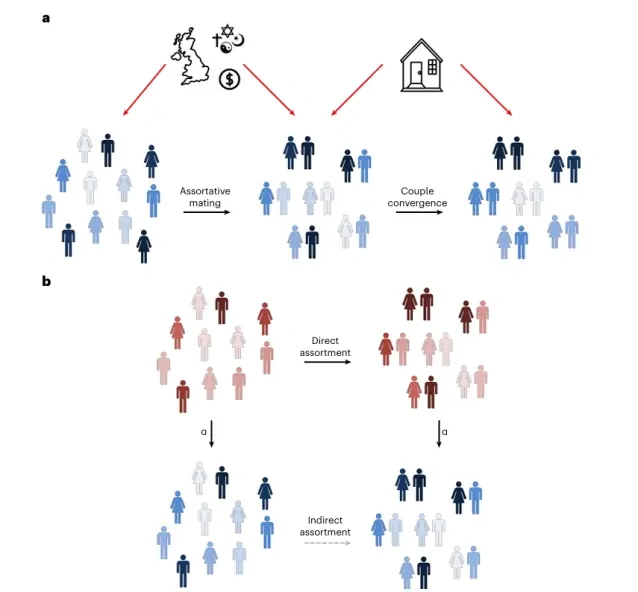
This "birds of a feather" resemblance, then, is half deliberate preference and half the very real way social circles sort us: we mostly meet people who already live in the same frequency band as we do.
The Preference Was Written Into Genes
Having untangled the surface level, researchers dug one layer deeper: is this "preferring similar" tendency itself inherited? Is it a fixed human rule, or does it change with the times?
A 2026 study in Nature Human Behaviour (published in August) answered the question with a new technique — interchromosomal phasing. Without directly genotyping couples, the team reconstructed the parental haplotypes of more than 440,000 people in the UK and Estonia, then compared maternal and paternal genetic similarity to infer the mating preferences of the previous generation.
The analysis locked in 11 traits with significant genetic assortative mating, with height and education the most typical — tall people tend to choose tall partners, and people with similar education levels pair up more easily. Four more traits held in both populations: TV watching time, fluid intelligence, general health, and lung capacity.
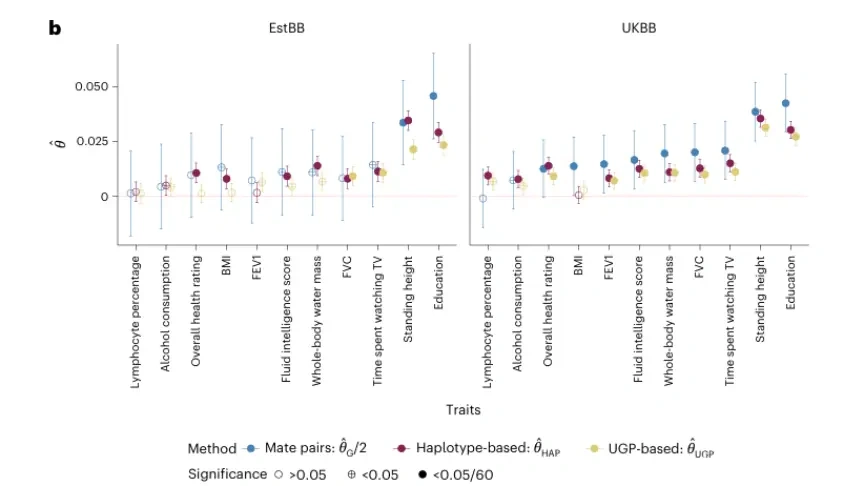
To rule out "they live close, so they're similar," the team ran a control: they randomly paired strangers who lived less than 1 kilometre apart and calculated their genetic similarity. Neighbours did show faint similarity — but real couples were far above that level.
The logic snaps into place: similar circles first place us in front of each other; then the similar traits themselves do the work of attraction.
Younger Generations Want the Same Type More
Here is the strangest part. This "choose similar" pattern has not faded with social openness — it has strengthened in recent generations.
Splitting the sample by birth year into three groups (<1960, 1961–1980, >1980), the study found that assortative mating intensity for the two core traits — height and education — rose in each younger cohort. In Estonia, for example, people born before 1960 had a height mating coefficient of 0.015; among those born after 1980 it nearly tripled to 0.041. Educational similarity rose in parallel.
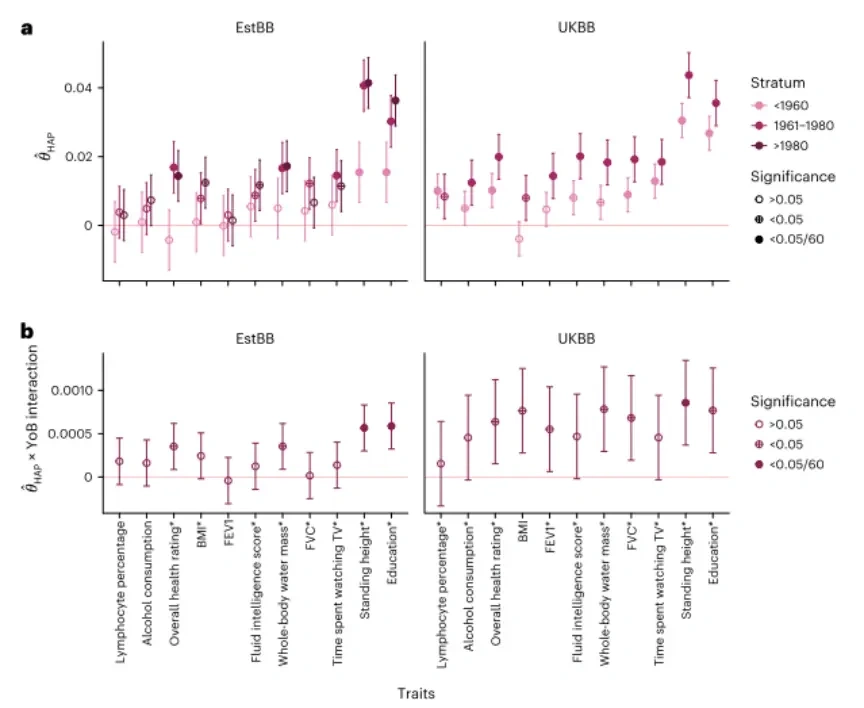
It feels backwards: the older generations were more restricted by geography and family, so they should have "accidentally" matched more similar partners. Today's wider dating pool and freer choice should produce less similarity — yet people pick alike more.
The difference lies in the logic of choice. The old similarity was "no other option": the people around you were simply your neighbourhood and your workplace. The new similarity is "active filtering": with mass education and internet dating, we pre-filter by degree, interest, and lifestyle before asking whether we like someone. Filter hard enough, and whoever is left naturally resonates with you.
The Ideal Partner Is a Better Version of You
Group-level patterns are clear. But person to person: do we really actively prefer someone like ourselves — or is it just an unintended by-product of circle sorting?
A 2026 study in Evolution and Human Behavior approached this from the angle of the "ideal partner." Researchers asked 538 Norwegian university students to rate their own Big Five personality traits and social dominance orientation (SDO), and to rate their ideal opposite-sex partner on the same scales.
Two findings stood out.
First, every trait shows similarity preference, but with wildly different strengths. Among the Big Five, neuroticism (emotional stability) showed the weakest similarity preference, rising through conscientiousness, extraversion, openness, and agreeableness. But SDO — a measure of attitudes toward social hierarchy, essentially a proxy for worldview and politics — reached a similarity correlation of 0.82, far ahead of every personality trait.
In other words, personality clashes can be smoothed over; a clash of worldviews is the real wall. People's insistence on "same values" far exceeds their wish for "same personality."
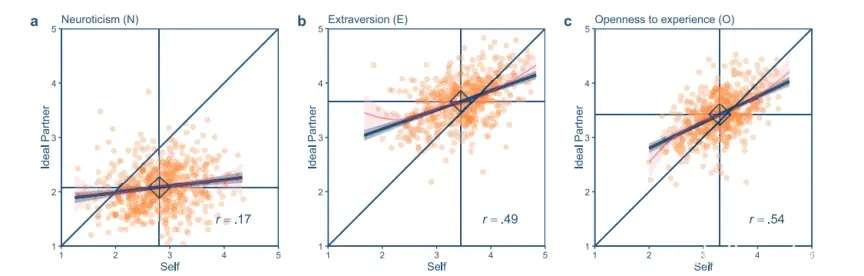
Second, the ideal is "like me, but slightly better." Nearly everyone wanted a partner lower in neuroticism (more emotionally stable) and a bit higher in conscientiousness, agreeableness, and extraversion. The one place the demand stayed plain: worldview and social attitudes — just the same as mine.
Then there is the mismatch between ideal and reality. Men's expectation of agreeableness matches what women actually average. But the agreeableness women expect is a notch above what men actually deliver. Conversely, men demand more emotional stability than women's average neuroticism level provides.
In plain terms: the gentle, considerate man women want, and the emotionally stable woman men want — both are scarce goods in reality.
What "Meant to Be" Really Is
We like to think a spark is a miracle — a glance across the room, texting until 3 a.m., that "me too" moment of surprise. But behind those apparently random moments, the groundwork was already laid: you grew up in similar environments, were shaped by similar values, and run on a similar daily rhythm. No wonder, in a sea of people, you noticed them first — and felt understood by them fastest.
"Meant to be" was never a person pre-assigned by fate. It is that you walked along, met someone, and saw in their eyes a familiar world — your habits, your preferences, your way of looking at life, and even a version of yourself you had not fully noticed.
So we never fall for a total stranger. We fall for someone who resonates at the same frequency — and for the self that is reflected back in them.
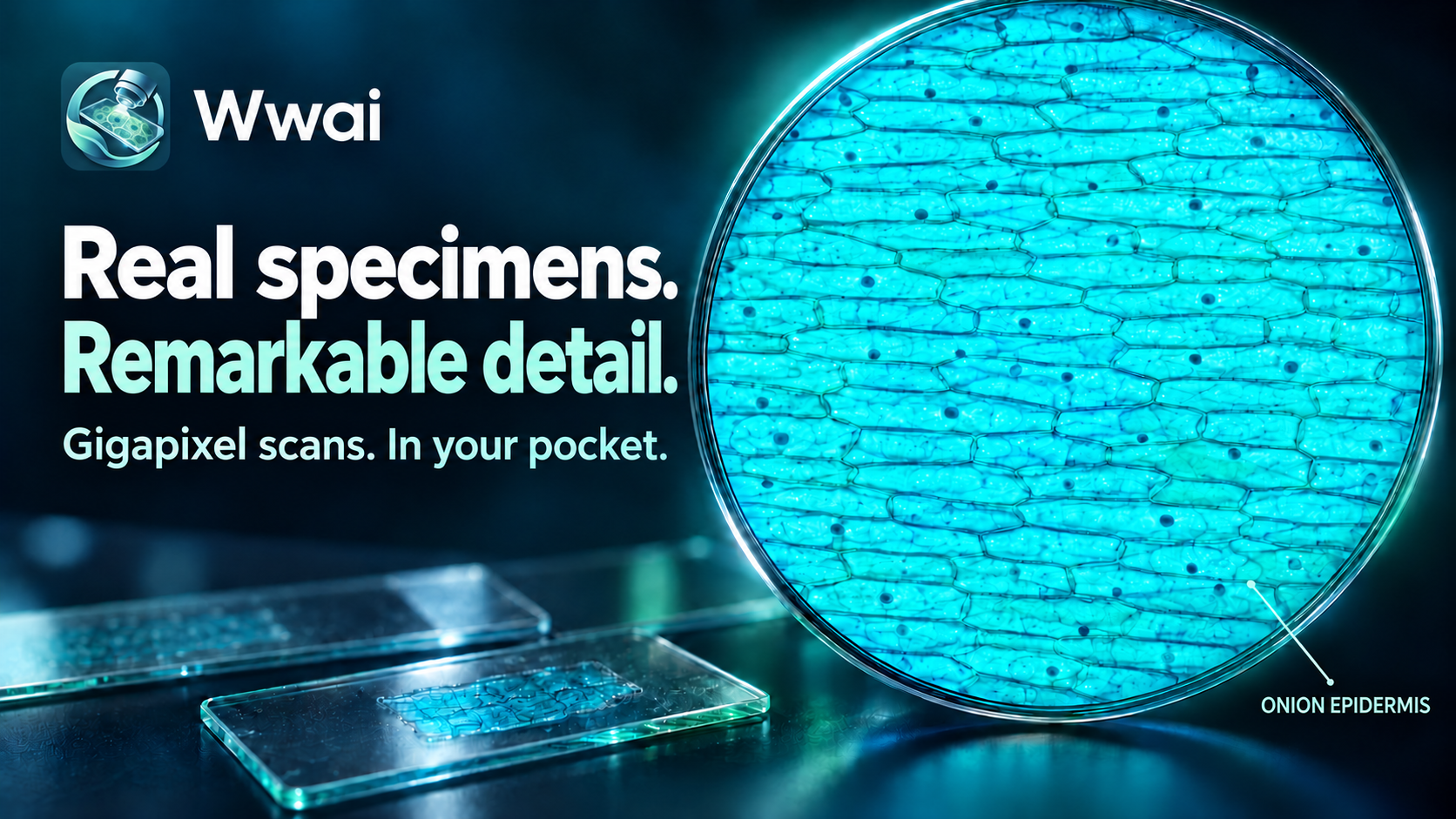
Height, lung capacity, education, worldview: the traits that decide whom we choose are the same ones written into our cells. Ever wondered what the cells behind your own preferences actually look like? With WWAI you can observe them now — no microscope delivery, no slides to prepare. A real biological specimen is on screen the moment curiosity strikes, including a human blood smear specimen where red blood cells, white blood cells and platelets are clearly visible. Ask the AI what each cell does, and zoom in on the microscopic world inside you. Search "WWAI" in your app store and download it today.
Related reading

Quick Mating & Evolution: Why Fast Didn't Win

Female Thigh Fat: A Second Sex Characteristic

Male Lactation Is Real: Why Females Nurse
References
Sjaarda J, Kutalik Z. Partner choice, confounding and trait convergence all contribute to phenotypic partner similarity. Nature Human Behaviour. 2023;7:776–789. doi:10.1038/s41562-022-01500-w.
Hofmeister RJ, Marnetto D, Cavinato T, et al. Parental haplotype reconstruction in up to 440,209 UK and Estonian individuals reveals recent assortative mating dynamics. Nature Human Behaviour. 2026. doi:10.1038/s41562-026-02556-8.
Kleppestø TH, Bendixen M, Sunde HF, et al. The attractive personality: Like me, but better. Evolution and Human Behavior. 2026;47(1):106811. doi:10.1016/j.evolhumbehav.2025.106811.
- Why Do Mouth Wounds Heal So Fast? The Mouth's Secret
- 嘴破為什麼好得快?口腔傷口的隱藏機制 | stellarx
- 為什麼小型脊椎動物取代不了昆蟲?
- Why Can't Small Vertebrates Replace Insects?
- 生肉到底要不要洗?小心水花飞溅,让致病菌污染整个厨房
- Off-Topic Answers Reveal the Question Behind the Question
- 每個答非所問的背後,都有一個還沒問出口的問題
- Are Earthworms Good for Your Garden? The Truth
- 蚯蚓塔堆肥是福是禍?蚯蚓糞的隱藏缺點一次看清
- Why Do Couples Look Alike? Assortative Mating Explained

全部评论