Why Do Mouth Wounds Heal So Fast? The Mouth's Secret
Your mouth is one of the dirtiest holes on your body — packed with bacteria, rubbed by food, scrubbed by brushing. And yet a wound there heals faster, and leaves almost no scar, than anywhere on your skin. This is not an illusion: mouth wounds really do heal so fast that scientists have built a research field around asking why. The body, it turns out, gave your mouth a cheat code.
You know the feeling. Bite the inside of your cheek by accident and it hurts hardest in the first minutes. Half a day later it barely hurts. A day or two later, the mirror shows almost nothing. Meanwhile a cut of the same size on your hand is still wearing a scab.
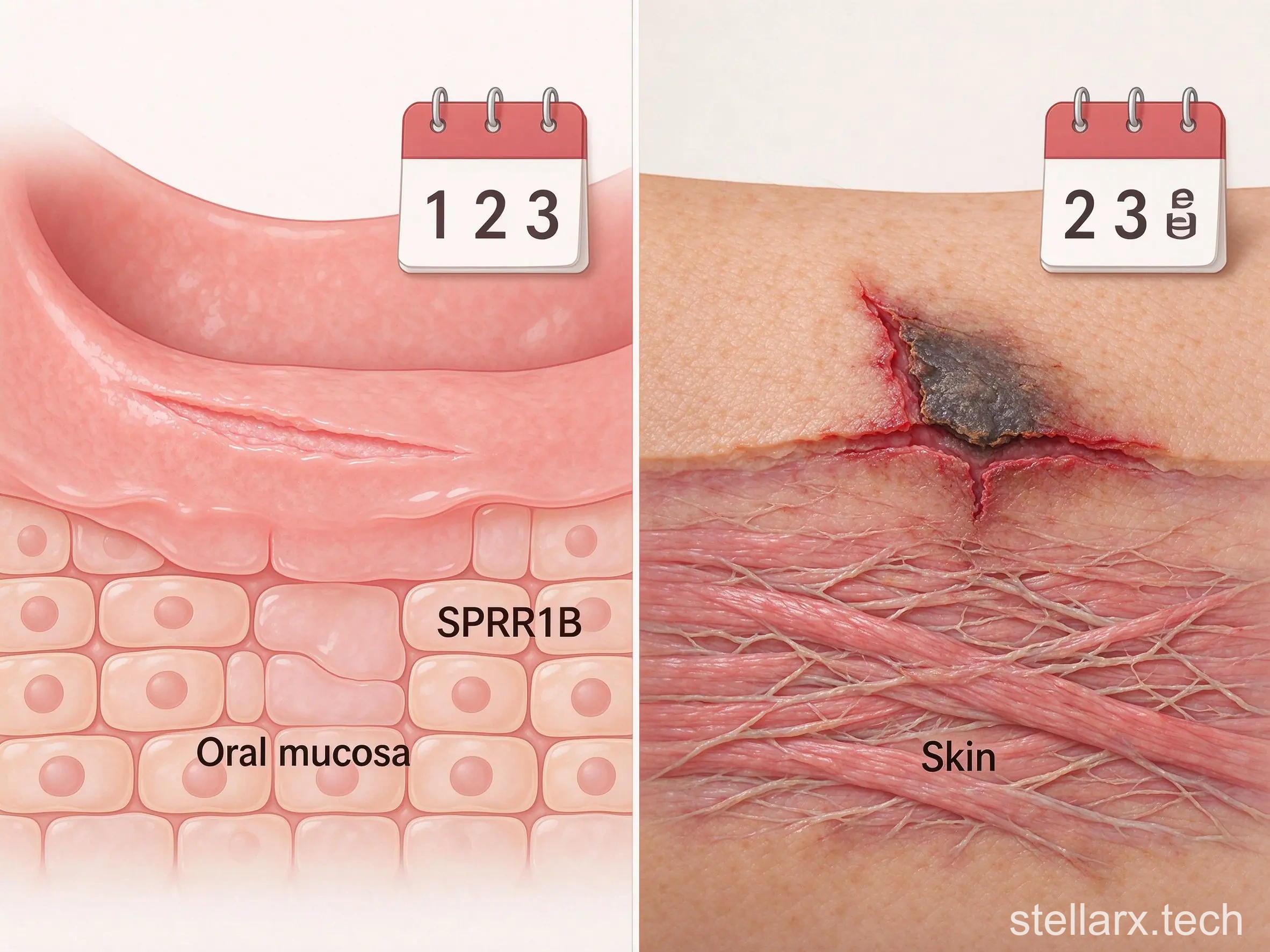
Why mouth wounds heal so fast: three layers of advantage
Scientists have even measured the gap. In 2018, a team at the U.S. National Institutes of Health made identical 3 mm punch biopsies in the cheek lining and the skin of 30 healthy volunteers — same person, same size wound, twice over. By day 3, the mouth wounds were almost covered by new epithelium, while the skin wounds still showed a tongue-like band of cells crawling under the scab. By day 6, the mouth wounds were completely healed; the skin wounds were still re-epithelializing. Because each pair came from the same person, age, nutrition, immunity and smoking status were all matched — leaving only the tissue itself to explain the difference.
Fast oral wound healing is not one trick. It is the combined work of three layers — the cells, the chemical signals, and the physical environment. Each one alone would help; together they make the mouth the fastest-healing, least-scarring place on an adult body.
1. The cells come pre-armed
Oral mucosa cells carry a fast-repair gene program that is switched on before any injury happens. A subset of keratinocytes in the oral lining is unusually rich in a protein called SPRR1B — almost absent from normal skin — and when a wound appears, these cells are activated through the STAT3 signaling pathway, which drives cell migration. The result is a wound that closes at speed. STAT3, for the record, is a transcription factor that waits in the cytoplasm like a phone by the door: when a cytokine upstream calls, it gets phosphorylated, moves into the nucleus, and switches on a batch of repair genes. The mouth's keratinocytes also divide and migrate far faster than their counterparts in skin.
2. Saliva is a free healing drug
Do not look down on spit. Saliva is not just a lubricant — it is a complex mixture that works as a free wound-healing drug. It does two main jobs.
First, it speeds up clotting. Saliva carries high levels of tissue factor, which kick-starts coagulation faster and lays a solid foundation for everything that follows.
Second, it keeps supplying growth factors — most notably vascular endothelial growth factor (VEGF), which drives the new blood vessels that deliver oxygen and nutrients to the wound, and epidermal growth factor (EGF), which pushes cells to divide. Experiments that remove salivary VEGF show oral wound healing slowing dramatically. That is how important spit is: for a wound inside the mouth, it is almost all upside.
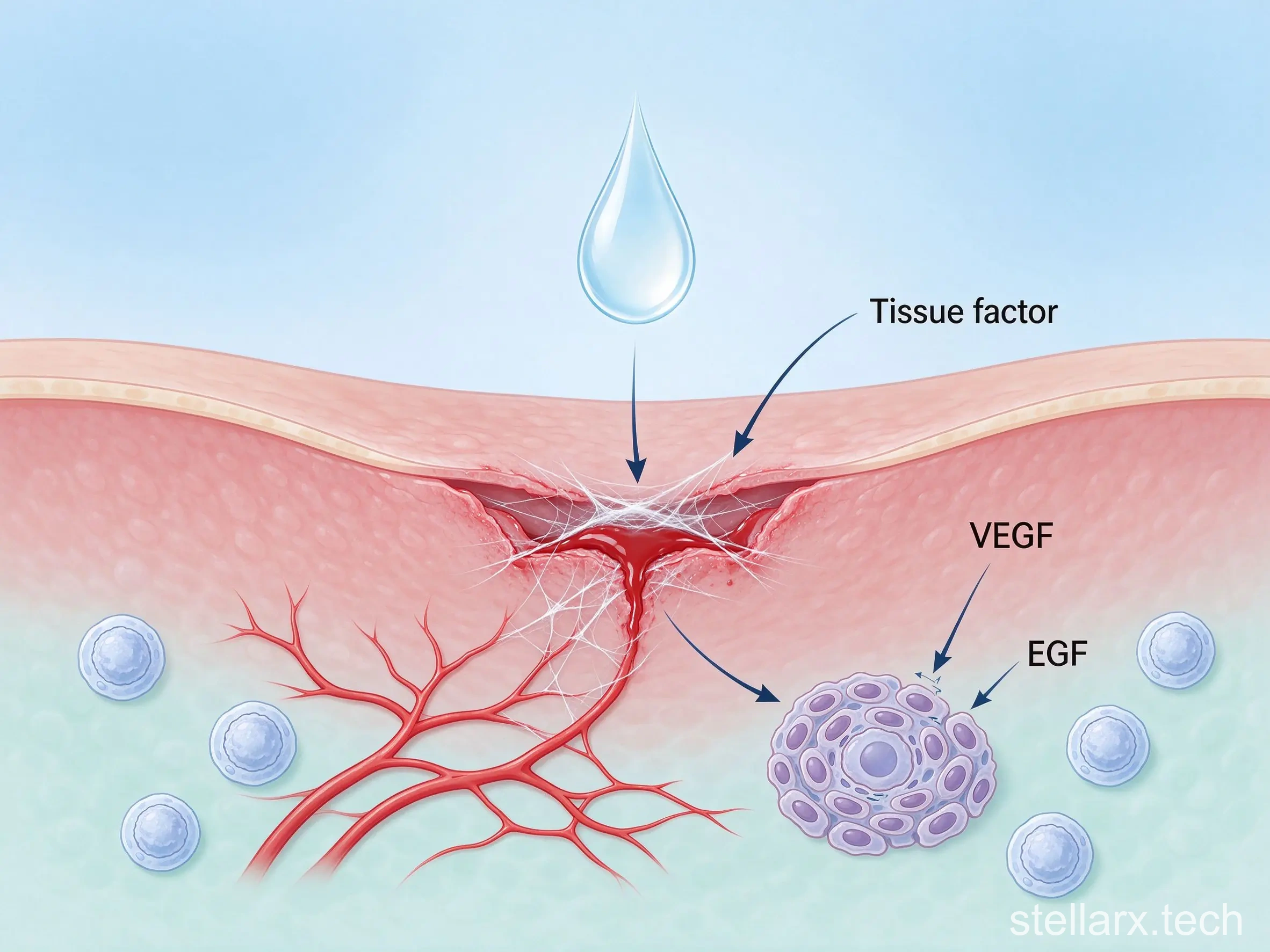
3. The environment keeps inflammation on a short leash
Because the mouth is a favorable environment, its immune response is fast and accurate. Oral immunity reacts quickly, yet inflammation stays controlled — generally lower than on skin. That efficient, contained response clears pathogens without letting excess inflammation destroy tissue, which creates ideal conditions for rapid repair.
There is a second physical bonus. In the late phase of healing, the mouth clears out the surplus new blood vessels far more efficiently than skin does. Which is why the finished tissue looks closer to normal.
Why bacteria and daily abuse don't slow mouth wounds down
Two things should, in theory, wreck a mouth wound: the bacteria and the constant abuse. They do not. Here is why.
The oral microbiome is not a pure threat. A newer view is that these resident microbes train and alert the immune system, keeping it in a state of moderate vigilance — which helps healing rather than hindering it. As for friction and movement, the repair machinery is efficient enough that healing outruns the damage. Even a wound that gets bumped keeps closing anyway.
The MSD Manual agrees. Tongue injuries are the most common cause of tongue discomfort, and the tongue's sensory nerve endings make it more sensitive to pain and touch than most of the body. A superficial wound heals quickly, deep wounds usually do not last more than three weeks, and many tongue lacerations heal fine without sutures at all. Rich blood supply does the heavy lifting.
Why mouth wounds barely leave scars
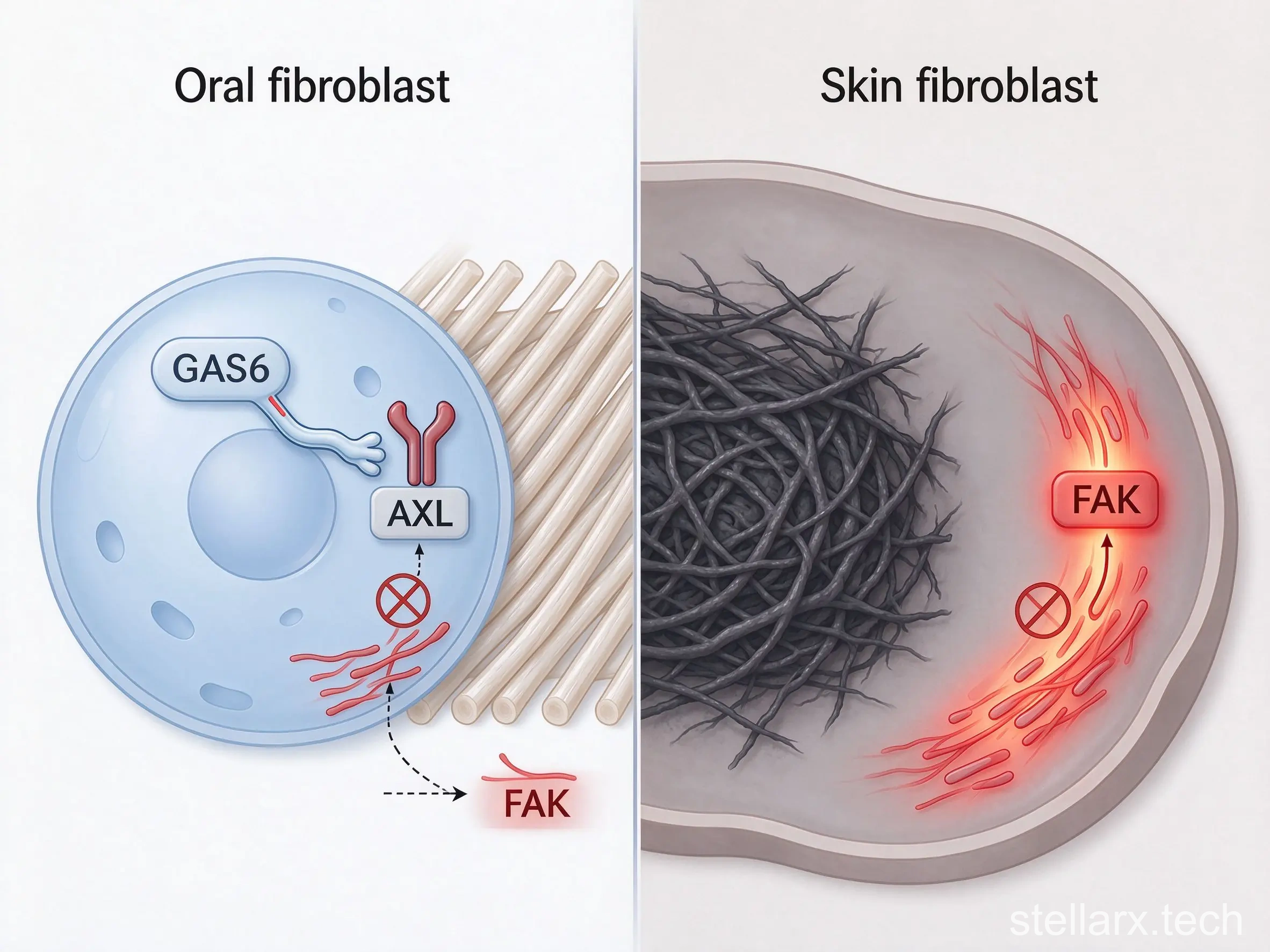
Skin wounds heal by rushing: fibroblasts churn out collagen to plug the gap, and that rushed, dense, disorganized collagen is what a scar is. Oral mucosa does it differently.
Oral fibroblasts highly express a protein called GAS6. When GAS6 binds the AXL receptor, it suppresses a pro-scarring pathway called FAK — a built-in anti-scar switch. A 2025 study in Science Translational Medicine confirmed the mechanics: oral mucosal fibroblasts use GAS6–AXL signaling to hold back fibrosis-related FAK activity; knocking down AXL in the mouse oral mucosa produced fibrotic wounds with higher FAK activation, while delivering GAS6 to facial skin made wounds heal regeneratively. Human oral scars from repeated injury show exactly the reverse — less GAS6 and AXL, more FAK.
The second reason is architecture. Collagen laid down in oral wounds stays close to normal tissue structure. Skin scars are dense and disordered. That difference is why a healed mouth wound looks and works better than a healed skin wound.
Six rules for a mouth wound
Most shallow mouth wounds are nothing to worry about — two to three days and they are gone. If a wound is deep, lasts more than two to three weeks, or shows signs of serious infection, see a doctor. For the everyday bite, the MSD-backed care rules are simple:
Don't spit repeatedly. Every time you spit, you throw away repair signals, and your mouth feels drier and drier.
Skip alcohol-based mouthwash. It does not disinfect — it pours salt on the wound.
Don't poke it with your tongue. Each lick peels back the repair layer you just laid down.
Rinse with warm water or mild salt water after meals — just enough to carry food debris away. Do not swish forcefully.
Use a soft toothbrush and slow down near the wound. No stabbing.
Eat soft, warm food. Give hot and spicy foods a three-day rest.
Your mouth's physiology was forced out by evolution. Put bacteria, friction and irritation together on skin and it is a stacked disaster; put them in the mouth and it is just daily training. The little spot you bit understands survival under difficult conditions better than any patch of skin on your body. For a small mouth wound, do not overthink it — the fastest fix is already in your mouth.
Want to see the machinery that makes mouth wounds heal so fast? Open the WWAI app and take a look under a virtual microscope at the cells that line your mouth and close your wounds — including a specimen where the fast-growing epithelium is clearly visible. Search for WWAI in your app store and observe the microscopic world for yourself.
Related reading

One Kidney vs Liver Regeneration: Why They Differ

Tetanus From a Tiny Wound: No Rust Needed

Always Tired? Low-Grade Inflammation May Be Why
References
Iglesias-Bartolome R, et al. Transcriptional signature primes human oral mucosa for rapid wound healing. Sci Transl Med. 2018;10(451):eaap8798.
Growth arrest specific-6 and angiotoxin receptor-like signaling drive oral regenerative wound repair. Sci Transl Med. 2025;17(805):eadk2101.
MSD Manual. Tongue injuries and injuries to the mouth.
- Why Do Mouth Wounds Heal So Fast? The Mouth's Secret
- 嘴破為什麼好得快?口腔傷口的隱藏機制 | stellarx
- 為什麼小型脊椎動物取代不了昆蟲?
- Why Can't Small Vertebrates Replace Insects?
- 生肉到底要不要洗?小心水花飞溅,让致病菌污染整个厨房
- Off-Topic Answers Reveal the Question Behind the Question
- 每個答非所問的背後,都有一個還沒問出口的問題
- Are Earthworms Good for Your Garden? The Truth
- 蚯蚓塔堆肥是福是禍?蚯蚓糞的隱藏缺點一次看清
- Why Do Couples Look Alike? Assortative Mating Explained
全部评论