Off-Topic Answers Reveal the Question Behind the Question
A prompt is going viral right now: "Of all the questions we keep discussing, is there a deeper one I have been circling for years without ever really asking?"
It resonates with a lot of people, and that resonance says something uncomfortable: asking questions is itself a skill with a threshold. When someone is confused, the problem often is not the question they manage to describe — the "surface question." It is the deeper question they cannot yet see, and cannot yet put into words.
Many questions on Q&A sites are exactly that: surface questions circling a deeper one. The more precisely an answer targets the surface question, the weaker it is at explaining the deeper problem underneath. So the answer that looks "off-topic" is often the only one that can actually untangle the confusion.
I ran into a textbook example last year. Someone asked: can an irrational number be a denominator?
On the surface it sounds almost nonsensical. The instinctive rebuttal is: why can't an irrational number be a denominator? Isn't 1/π a number?
Here is the thing. A question only looks absurd because the situation that produced it is absurd. If you put yourself on the questioner's level, assume they are asking in good faith instead of looking for trouble, you start to wonder what kind of background could push someone to ask this. And when you see a strange question, you should always assume there is a strange background behind it.
The background, in this case, was a change in how textbooks define rational numbers. Starting in the fall semester of 2024, the new textbooks matched to the 2022 curriculum standard came into use. The old textbook defined rational numbers inductively — "integers and fractions together are called rational numbers." The new textbook defines them differently: "a number that can be written in fractional form is called a rational number."
That definition is incomplete. It never defines what "fractional form" means. It relies on an implicit restriction — the numbers you have already learned — and that fractional form quietly assumes the numerator and denominator are both integers.
[
Students only reach irrational numbers in the second semester of 7th grade, and there the missing piece is finally added: "an irrational number is a number that cannot be written as the ratio (fraction) of two integers."
Now follow the questioner's reasoning. The parentheses in that definition are an appositive — an explanation that should be equivalent to what it explains. So the two halves should be interchangeable. Does that mean only "the ratio of two integers" counts as a "fraction"? Does that mean an irrational number cannot be a numerator or a denominator? Wait — but irrational numbers show up as numerators all the time. So... irrational numbers just can't be denominators?
That is how the surface question was born: "can an irrational number be a denominator?"
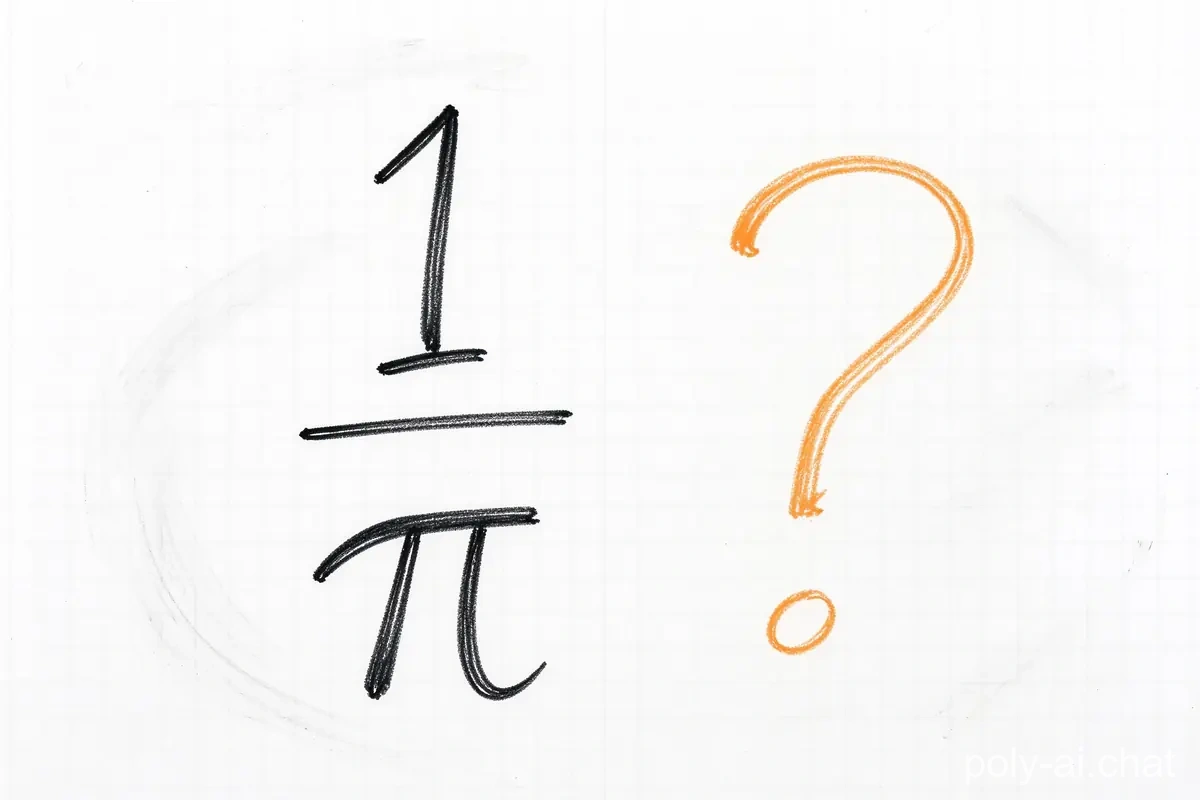
The answer to a surface question is not the point. The point is finding the deeper question hiding behind it.
Which brings up a second layer: is the deeper question a reader infers always the one the asker actually means? Of course not. Everyone reads other people's questions through their own history. The questioner's surface problem triggers some similar confusion the reader once had, and the reader unconsciously migrates from the surface question to their own deeper one.
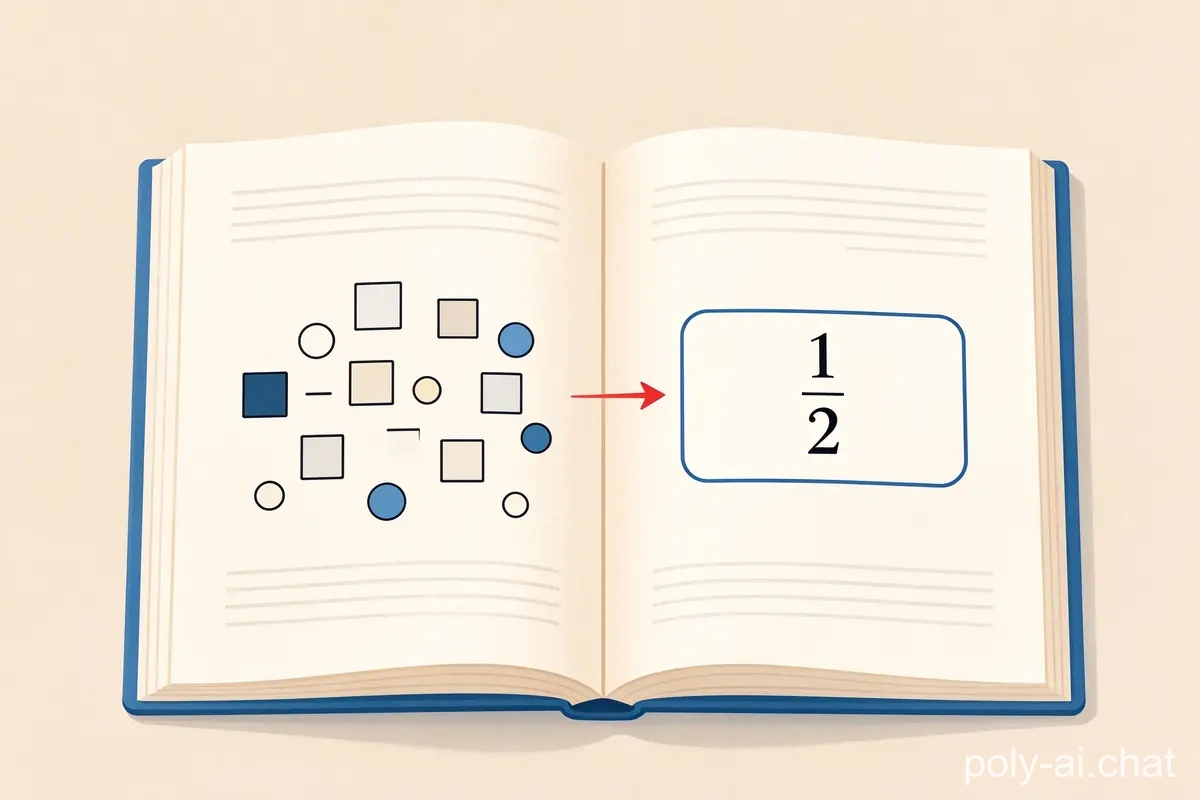
A lot of answers, in the end, are written for the person writing them.
And yet that habit is exactly what keeps surfacing the questions nobody has learned to ask. In the age of AI, the surface question is the one any model can answer in seconds. The skill that is suddenly scarce is the deeper question — the one behind the question, the one you have not yet put into words. Asking "which cloud plan should I pay for" is a surface question. The deeper one is: I already own a PC full of videos — why is that hardware not the answer?

That deeper question has a practical answer. You can watch your own PC videos on your phone without a cloud upload — no new subscription, no re-downloading everything, no paying twice for files you already own. MediaSyncClaw streams videos from your PC to your phone over your own hardware, and turns the machine you already paid for into your personal media server. Search "MediaSyncClaw" in your app store and try it.

Related reading

Old Phone to USB Drive: How to Turn a Dead Phone's Chip Into…

AI Consumer Spending: Only Power Users Pay

The One-Man Physics Encyclopedia That Beats a $20,000 Univers…
- Why Do Mouth Wounds Heal So Fast? The Mouth's Secret
- 嘴破為什麼好得快?口腔傷口的隱藏機制 | stellarx
- 為什麼小型脊椎動物取代不了昆蟲?
- Why Can't Small Vertebrates Replace Insects?
- 生肉到底要不要洗?小心水花飞溅,让致病菌污染整个厨房
- Off-Topic Answers Reveal the Question Behind the Question
- 每個答非所問的背後,都有一個還沒問出口的問題
- Are Earthworms Good for Your Garden? The Truth
- 蚯蚓塔堆肥是福是禍?蚯蚓糞的隱藏缺點一次看清
- Why Do Couples Look Alike? Assortative Mating Explained

全部评论