When Ancient Mythology Meets Modern Confusion: The Viral Watercolor Dragon Tutorial
The Hook
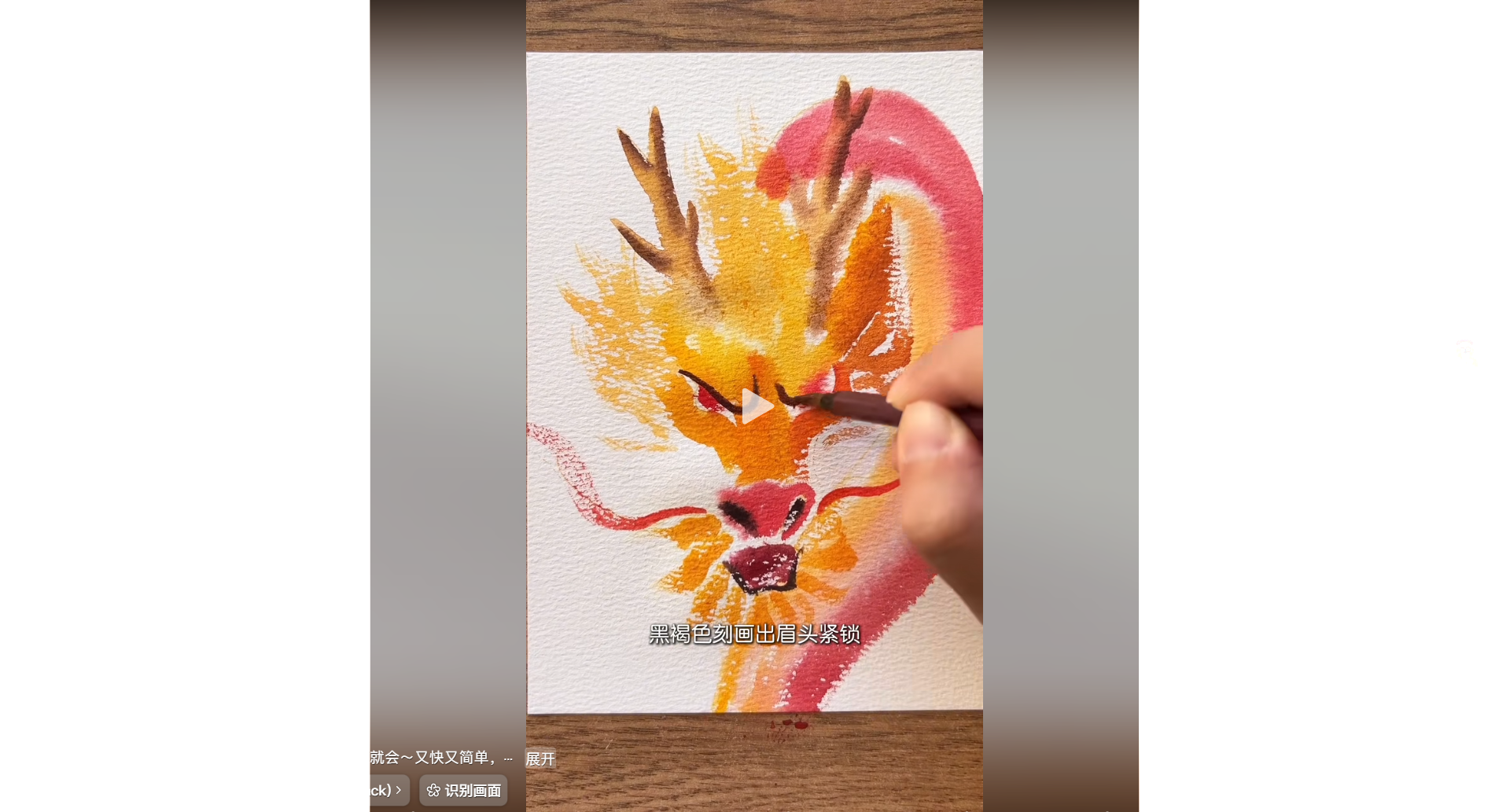
A seemingly simple watercolor tutorial for drawing a mythical dragon has sparked a massive online debate. Viewers are torn between the charm of traditional "nine similarities" symbolism and the chaotic reality of following step-by-step artistic instructions.
The Story
The video presents a guide to painting a dragon, breaking down its complex features—snake body, deer horns, camel head—into manageable strokes. It references the evolution from Hongshan culture jade pigs to Song Dynasty mythological beasts. However, the creative prompt "Do we still learn to draw in the AI era?" adds a layer of existential irony. As the artist sketches, viewers struggle to reconcile the elegant cultural history with their own clumsy attempts. The result is a digital space where admiration for tradition clashes with the humorous frustration of failed execution, turning a lesson in heritage into a meme about human limitations versus algorithmic perfection.
The Voices
01. The Disorientation of Abstract Steps
“I asked you to draw rabbit eyes, not rabbit teeth!”
“May I ask what role do those first few strokes ...”
“At the beginning, I thought you were drawing th...”
Think Tank Insight: This theme highlights the cognitive gap between expert intuition and novice perception. Viewers project familiar shapes onto ambiguous initial strokes, revealing how visual literacy relies on context that tutorials often fail to provide, leading to immediate confusion rather than clarity.
02. The Gap Between Ease and Execution
“Started at 10 PM and finished at 3 AM [crying w...”
“She draws like it's a game, and I draw like it’...”
“Easy to Learn, Hard to Master”
Think Tank Insight: Despite claims of simplicity, the high effort-to-result ratio exposes the hidden labor in artistic mastery. The contrast between the creator’s casual proficiency and the audience’s exhaustive struggle underscores the deceptive nature of "quick tutorial" marketing in an age demanding instant competence.
03. Cultural Parody and Surrender Humor
“Snake body with deer horns—isn't that the sneak...”
“This little dragon looks a bit aggrieved.”
“Biting off more than you can chew. That's enoug...”
Think Tank Insight: Users cope with failure through humor and recontextualization, transforming sacred cultural symbols into playful memes. By associating the dragon with "sneaky snakes" or expressing pity for the "aggrieved" creature, the community creates a safe space for artistic inadequacy, blending reverence with irreverent self-deprecation.
Word Cloud
| Sentiment Dimension / Observation Lens | Group Consensus Share |
|---|---|
| Misleading Drawing Steps | 45% |
| Easy to Learn, Hard to Master | 30% |
| Surrender Humor | 25% |
The Truth
Data Summary: Analysis shows a dominant sentiment of confusion (95%) regarding specific steps, followed closely by themes of difficulty (90%) and humorous surrender (85%), indicating that while interest is high, practical success rates are perceived as low.
Observer's Takeaway: The collective mood reflects a modern anxiety about skill acquisition in an accelerated content economy. Audiences resonate deeply with the "failure" narrative because it validates their own struggles against idealized standards. The controversy isn't just about art; it's about the erosion of patience. In a world where AI generates images instantly, the manual attempt to draw a dragon becomes a poignant, albeit comedic, assertion of human agency, even when that agency results in a "rabbit toothed" monster.
- Why Do Mouth Wounds Heal So Fast? The Mouth's Secret
- 嘴破為什麼好得快?口腔傷口的隱藏機制 | stellarx
- 為什麼小型脊椎動物取代不了昆蟲?
- Why Can't Small Vertebrates Replace Insects?
- 生肉到底要不要洗?小心水花飞溅,让致病菌污染整个厨房
- Off-Topic Answers Reveal the Question Behind the Question
- 每個答非所問的背後,都有一個還沒問出口的問題
- Are Earthworms Good for Your Garden? The Truth
- 蚯蚓塔堆肥是福是禍?蚯蚓糞的隱藏缺點一次看清
- Why Do Couples Look Alike? Assortative Mating Explained
全部评论