Salt: Why the Plainest Seasoning Works on Every Food
A king once asked his three daughters which food described their love for him. The eldest said sugar; the second said honey. The youngest answered: salt. He threw her out of the palace.
Years later she served him a banquet and told the cooks to leave the salt out of every dish. Facing mountains of fine food, the king could hardly swallow a bite.
Salt is the plainest thing in the kitchen, and the one every food can take. The reason is not one trick but three: it changes flavor, changes texture, and keeps food alive.
Why a Pinch of Salt Makes Food Taste Better
"Want it sweet, add salt" sounds like a contradiction, and it works: a little salt suppresses part of the bitterness in a dish and shifts how we perceive sweetness.
The same trick runs on umami. A chicken broth boiled with rich glutamates can still taste flat without salt — salt and glutamate interact in taste perception, and the umami comes forward. Salt does not create the flavor; it lets what is already there get through. Push it too far and the saltiness buries the food itself.
[1] The umami research of Yamaguchi and Ninomiya maps exactly this salt–glutamate interplay.
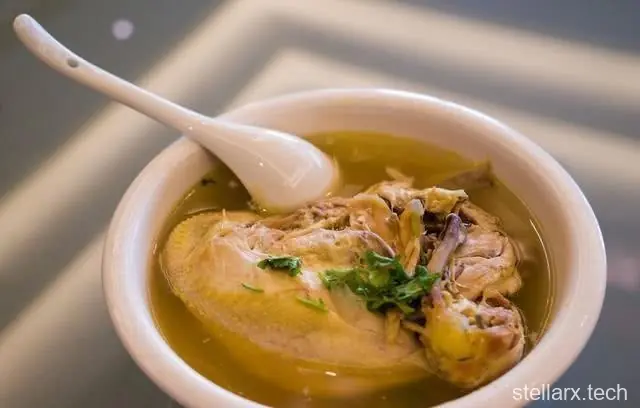
Salt Rewrites Texture by Moving Water
Add salt to minced meat and stir, and the mixture turns sticky. Salt draws part of the muscle proteins into solution — the salt-soluble proteins — and they knit into a network that holds a meatball together and gives it bounce. This is why salting and kneading change minced meat into something that can be shaped.
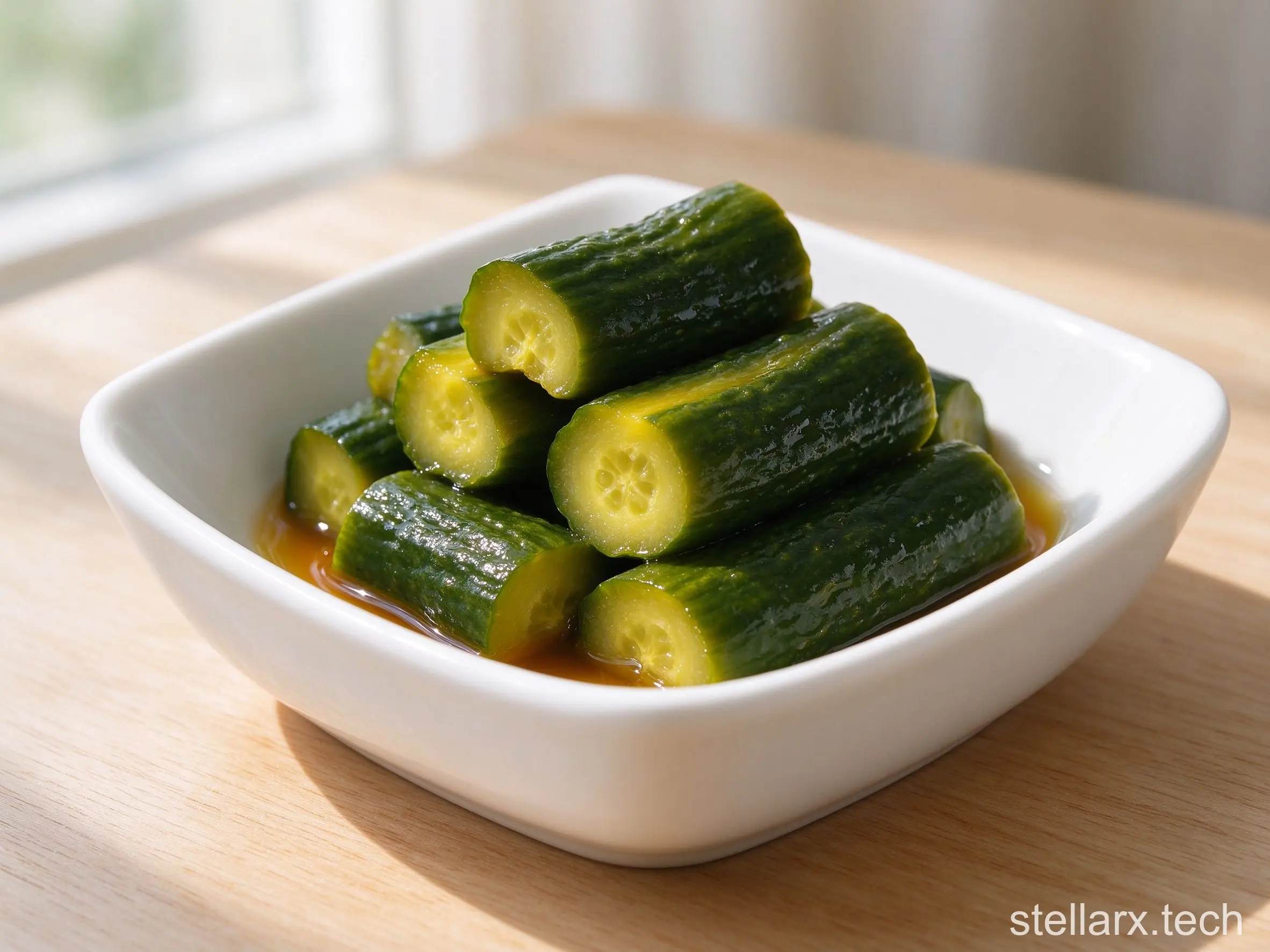
Salt moves water in the other direction in pickles. Sprinkled on cucumber, it pulls water out of the cells by osmosis. The flesh loses moisture and turns from shatter-crisp to a resilient, firm bite — the "kill the water" step behind pickled cucumber.
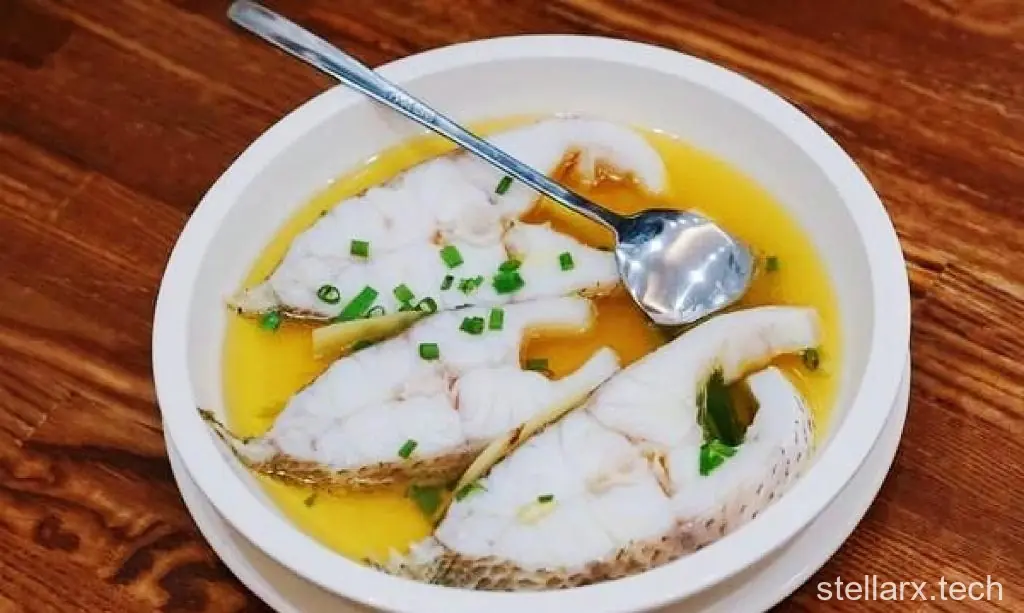
The same logic explains the Jiangnan practice of bao yan (抱腌): fresh fish rubbed with salt for a short time, letting the salt ease into the flesh and adjust its water content. The result is firmer, flakier fish with a clean salt-brined taste, quite different from fish cooked straight.
[2] McGee's On Food and Cooking covers salt-soluble proteins and brining in detail.
Salt Keeps Food Alive
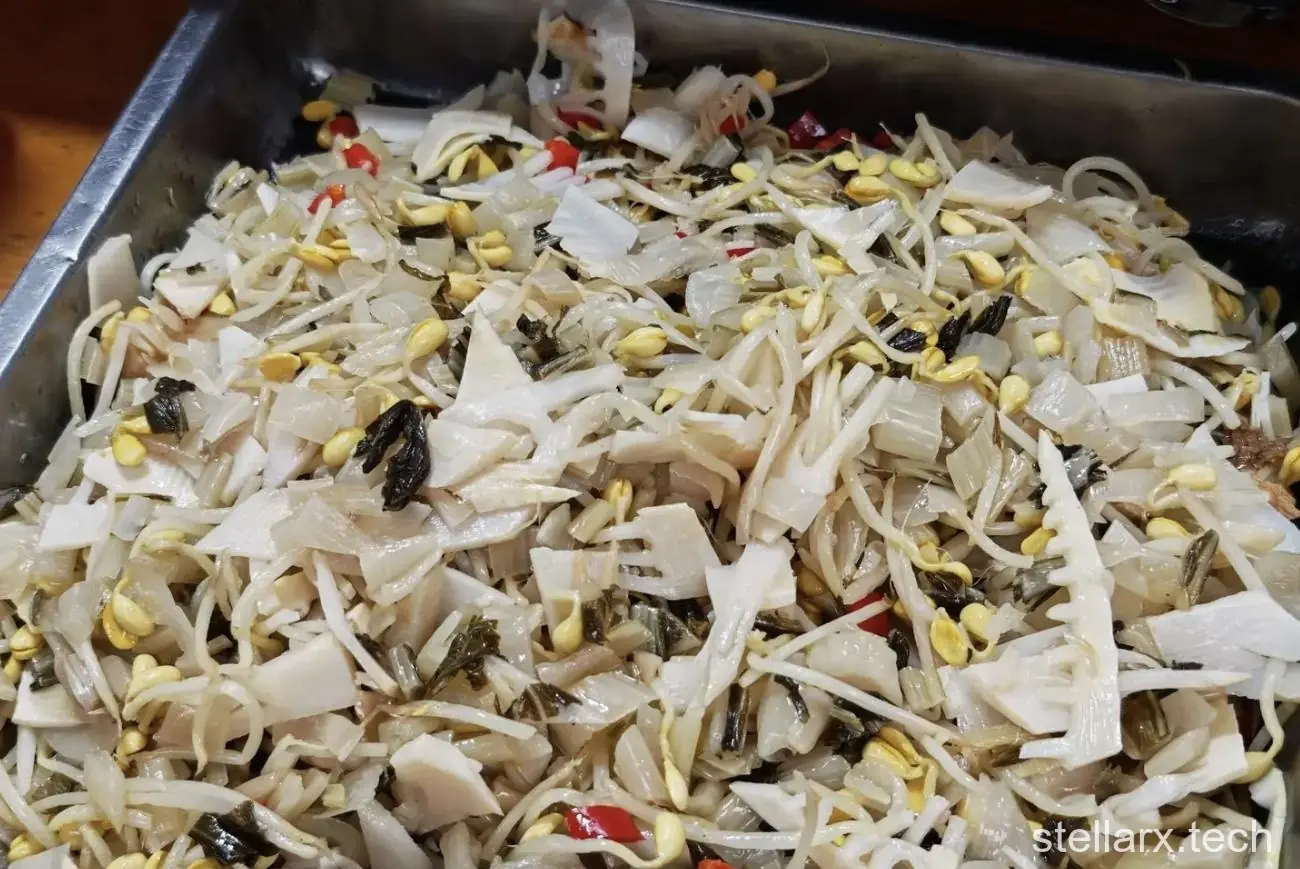
Before refrigerators, salt was a preservation method. The old Hangzhou saying runs "pickle vegetables at Lesser Snow, cure meat at Greater Snow" — long cabbage, potherb mustard, then bacon and sausage hanging in the winter air.
The mechanism is water activity. Salt lowers the amount of water available inside food, and most microbes cannot grow without it. That is why a vat of salted vegetables lasts through the winter while fresh greens rot in days.
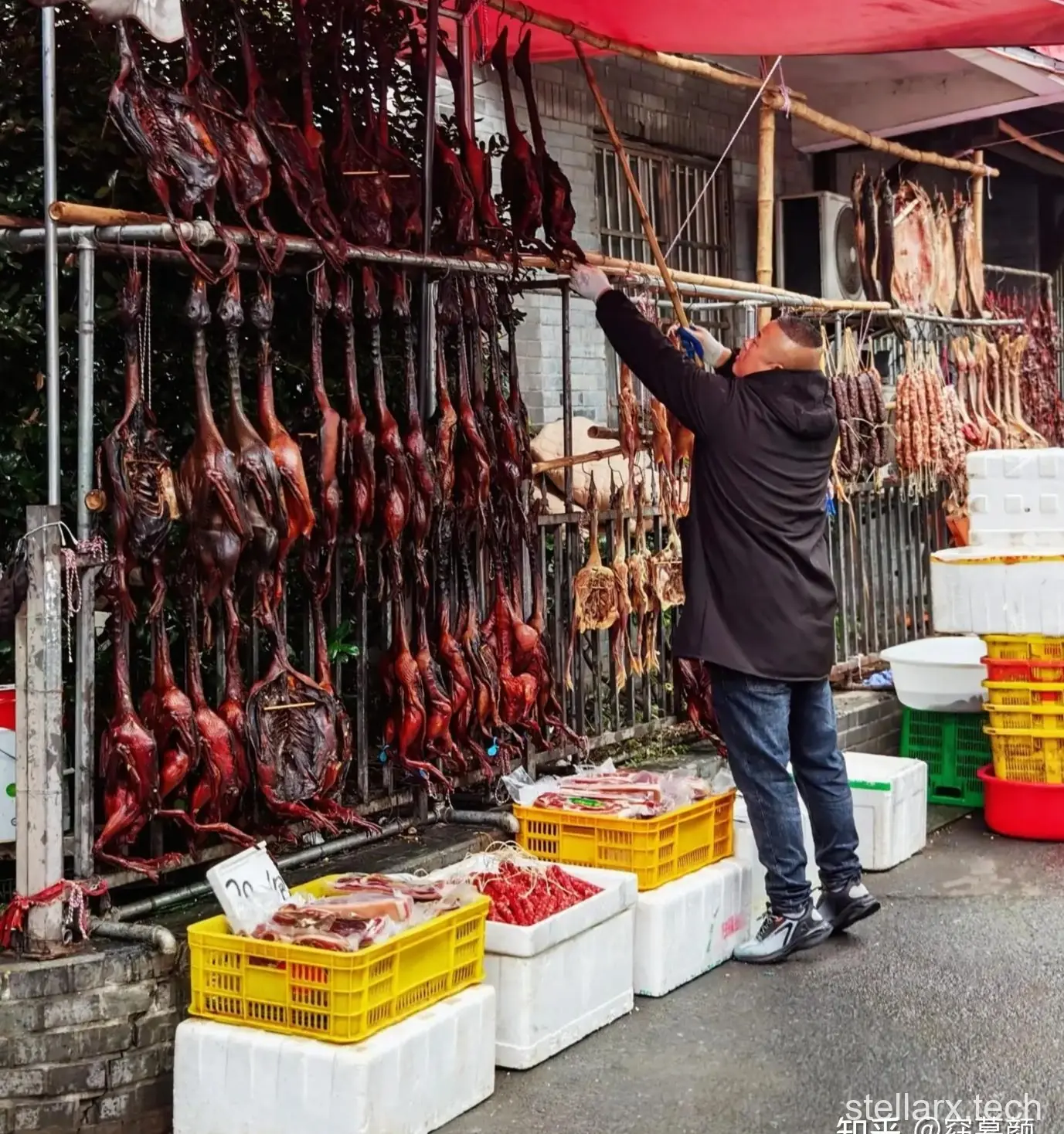
Salted vegetables also became the "umami backbone" of whole cuisines: one bite of salty preserved mustard elevates plain tofu and cheap greens. The dishes that run on this trick — yellow croaker with snow vegetable soup, Shanghai yan du xian — are the taste of a winter preserved.
[3] Troller and Christian's Water Activity and Food is the classic source on how available water governs microbial growth.
Does salt or sugar own soy milk, zongzi, or tangyuan? My answer is both. Sweet and salty are not natural enemies; each has its moment.
The king learned it the hard way. The most ordinary seasoning in the kitchen may be the one the whole kitchen leans on.
Ever wonder what a plant cell looks like while salt draws water out of it? Under a microscope, an onion epidermis specimen shows the cell walls and the central vacuole that shrinks as the cell gives up water — including a onion epidermis specimen where cell walls and the central vacuole are clearly visible. WWAI lets you observe specimens with a virtual microscope and ask questions about what you see, right when the curiosity hits. Search for WWAI in your app store to download it.

Related reading

Is Honey Bee Vomit? The Secret Life of Honey

Why Restaurant Meals Leave You So Thirsty

Woodpecker Concussion Myth: Real Brain Damage
References
[1] Yamaguchi, S., & Ninomiya, K. Umami and food palatability. The Journal of Nutrition, 130(4), 921S–926S, 2000.
[2] McGee, H. On Food and Cooking: The Science and Lore of the Kitchen. Scribner, 2004.
[3] Troller, J. A., & Christian, J. H. B. Water Activity and Food. Academic Press, 1978.
- Salt: Why the Plainest Seasoning Works on Every Food
- 鹽:最平凡的調味料,為什麼什麼菜都需要它?
- 长大以后,我们还能再去一次少年宫吗?
- Royalty Trope: Why Palace Romance Still Works
- 王族題材為何耐讀:宮廷羅曼史的慢熱結構
- H5N1、麻疹與疫情復燃的生物學
- H5N1, Measles and the Biology Behind Outbreaks
- A Planned Hair Color Preview Would Compare Colors on Your Photo
- 換髮色功能規劃用自己的照片比較不同顏色
- A Planned Face Shape Poster Brings Analysis and Styles Together
全部评论