Stolen Identity, Silent Partner: Viral Monkey Theft Sparks Debate on Safety and Relationships
The Hook
The Story
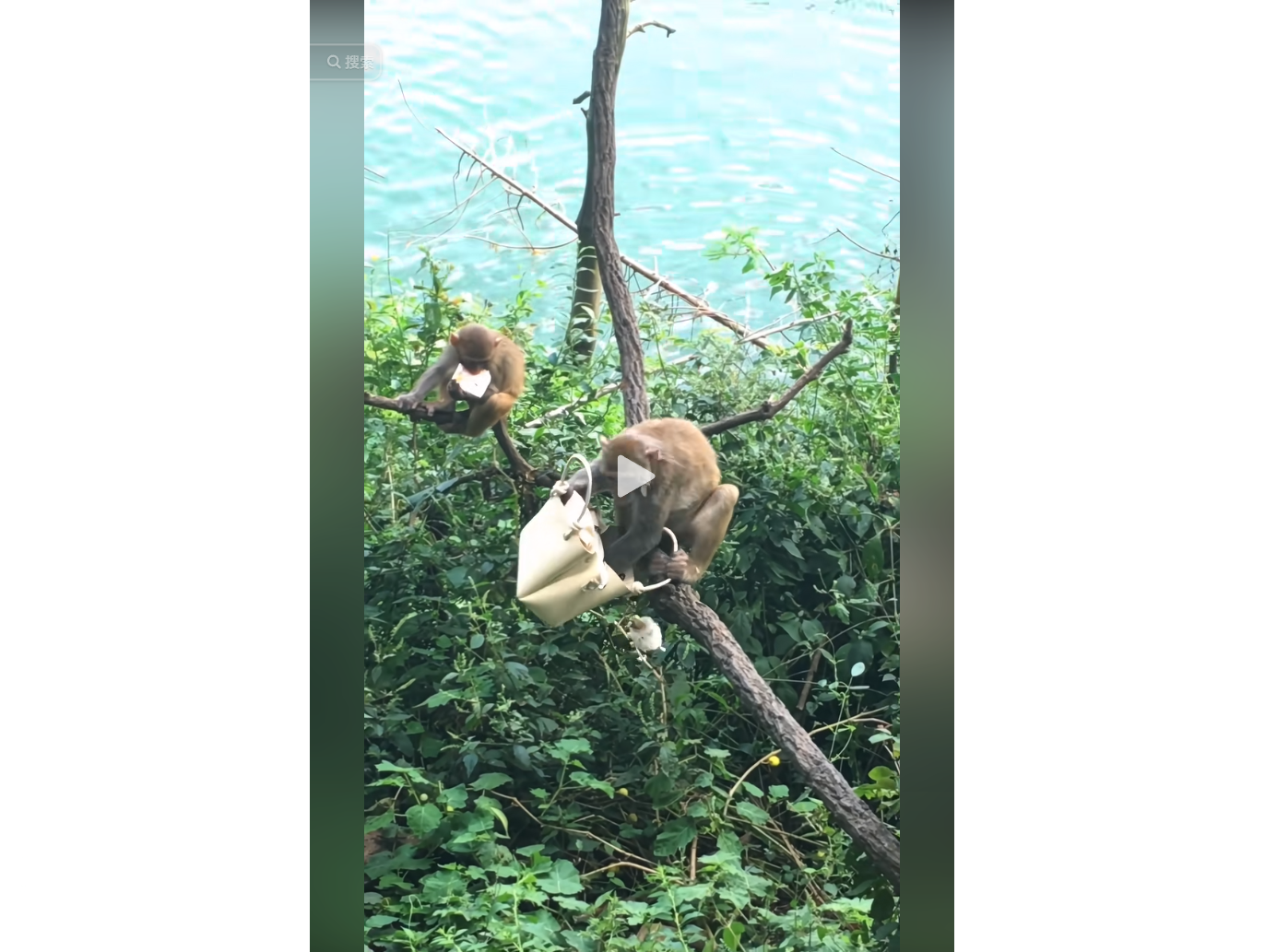
The video captures a chaotic moment at a scenic area where a female tourist frantically negotiates with a monkey that has commandeered her handbag. Her repeated cries of "Return my bag" and "My ID card is inside" highlight a specific, bureaucratic anxiety amidst the physical theft. However, the narrative tension extends beyond the human-animal conflict. The creative prompt framing this as a wife complaining about her husband's uselessness adds a critical layer of social commentary to the visual evidence. While the monkey rummages through personal belongings with impunity, the male companion’s passive presence becomes the secondary focal point. The scene transforms from a simple wildlife encounter into a complex tableau of vulnerability, where the failure to protect personal property is interpreted by audiences as both a safety oversight and a relational deficit. The emotional atmosphere oscillates between the victim's genuine distress and the internet's detached amusement, creating a dissonance that fuels engagement.
The Voices
01. Anthropomorphic Humor as Coping Mechanism
"Monkey: Now I'm someone with an ID card too"
"ID card? Let me look for it [DarkFace]"
Think Tank Insight: Netizens deflect empathy through anthropomorphism, transforming a distressing theft into absurdist comedy. By attributing human bureaucratic intent to the animal, the audience creates psychological distance from the victim’s plight, prioritizing meme generation over genuine concern for traveler safety or emotional well-being.
02. Weaponized Incompetence and Gendered Expectations
"This boyfriend is a lost cause. Just dump him."
"Did your boyfriend not hold onto your bag properly?"
Think Tank Insight: Comments reveal entrenched gender scripts where male companions are expected to serve as physical protectors. The partner’s passivity is framed not merely as a situational failure but as a fundamental character flaw, demonstrating how travel stress tests relationships against traditional, often rigid, performance standards of masculinity and competence.
03. Tactical Vigilance Over Institutional Trust
"I usually bring this whenever I visit places like this"
"Remember to bring this next time"
Think Tank Insight: Discourse shifts rapidly from sympathy to unsolicited tactical advice regarding self-defense tools. This reflects a broader societal erosion of trust in scenic area management, where tourists feel compelled to adopt paramilitary preparedness against wildlife, signaling that recreational spaces are now perceived as inherently hostile environments requiring personal armament.
Word Cloud
| Sentiment Dimension / Observation Lens | Group Consensus Share |
|---|---|
| Anthropomorphic Humor as Coping Mechanism | 45% |
| Weaponized Incompetence and Gendered Expectations | 30% |
| Tactical Vigilance Over Institutional Trust | 25% |
The Truth
Data Summary: Comment sentiment is heavily skewed toward humorous reinterpretation (90% focus on monkey behavior/ID search) and interpersonal critique (55% referencing the partner), with practical safety discussions comprising a significant but secondary layer of engagement.
Observer's Takeaway: The comment section reveals a digital culture where schadenfreude masquerades as entertainment. Audiences process the victim's distress through irony and relationship policing rather than empathy, suggesting a collective desensitization to individual misfortune in viral content. The fixation on the husband’s inaction indicates that modern viewers consume travel vlogs as moral plays on partnership viability. Ultimately, the monkey serves as a catalyst for projecting societal anxieties about safety, gender roles, and institutional failure, reducing a real person’s traumatic loss of identity documents to mere content fodder for communal judgment and laughter.
- Prehistoric Predator Meets Modern Mayhem: The Carcharodontosaurus and Honey Badger Saga
- AI重現史前霸主:當幼年鯊齒龍闖入現代优胜美地,誰才是山谷之王?
- Ghosts, Romance, and Rising Tensions: Inside the Latest Episode of an AI-Animated Series
- 《瑞草學院》東京篇陷抄襲風暴?觀眾怒嗆:原創在哪裡
- The Library Horror That Still Haunts Us: Why We Blame the Teammate, Not the Monster
- 童年陰影再襲擊:當「豬隊友」比怪物更令人崩潰
- AI Horror Short “Black Rain” Sparks Debate on Tech, Taboos, and Hollywood’s Future
- AI短劇《黑雨之下》爆紅:蒙眼佛頭與人性貪婪,觀眾驚呼「比真人更嚇人」
- The Cinema Killer? Viral AI Short Film Sparks Debate on the Future of Storytelling
- AI 末世短片引爆全網:當「個人原創」挑戰好萊塢敘事
全部评论