Introduction
A viral sketch reimagines an armed robbery as a job interview, revealing that corporate cost-cutting is more ruthless than criminal theft. This hilarious yet stinging satire exposes workplace absurdities through a robber’s unexpected employment at a meager salary.
What It's About
The video masterfully blends slapstick comedy with biting social commentary under the theme "Life is Everywhere an Interview." In a surreal twist, a robber attempting to hold up a company is swiftly processed by a charismatic HR manager named Sister Juan, who transforms his criminal demand for 3,000 yuan into a monthly security guard salary of 2,800. The scene captures a bizarre power dynamic where the predator becomes the prey of capitalism; the robber is not only disarmed but also unknowingly subjected to a 200-yuan monthly kickback deducted for the HR manager's lipstick. The emotional atmosphere oscillates between laughter and discomfort, as viewers recognize the terrifying efficiency of corporate bureaucracy that can absorb even violent disruption into its low-wage machinery. It is a creative prompt brought to life: capitalists are indeed more formidable than robbers because they legalize the extraction of value under the guise of employment.
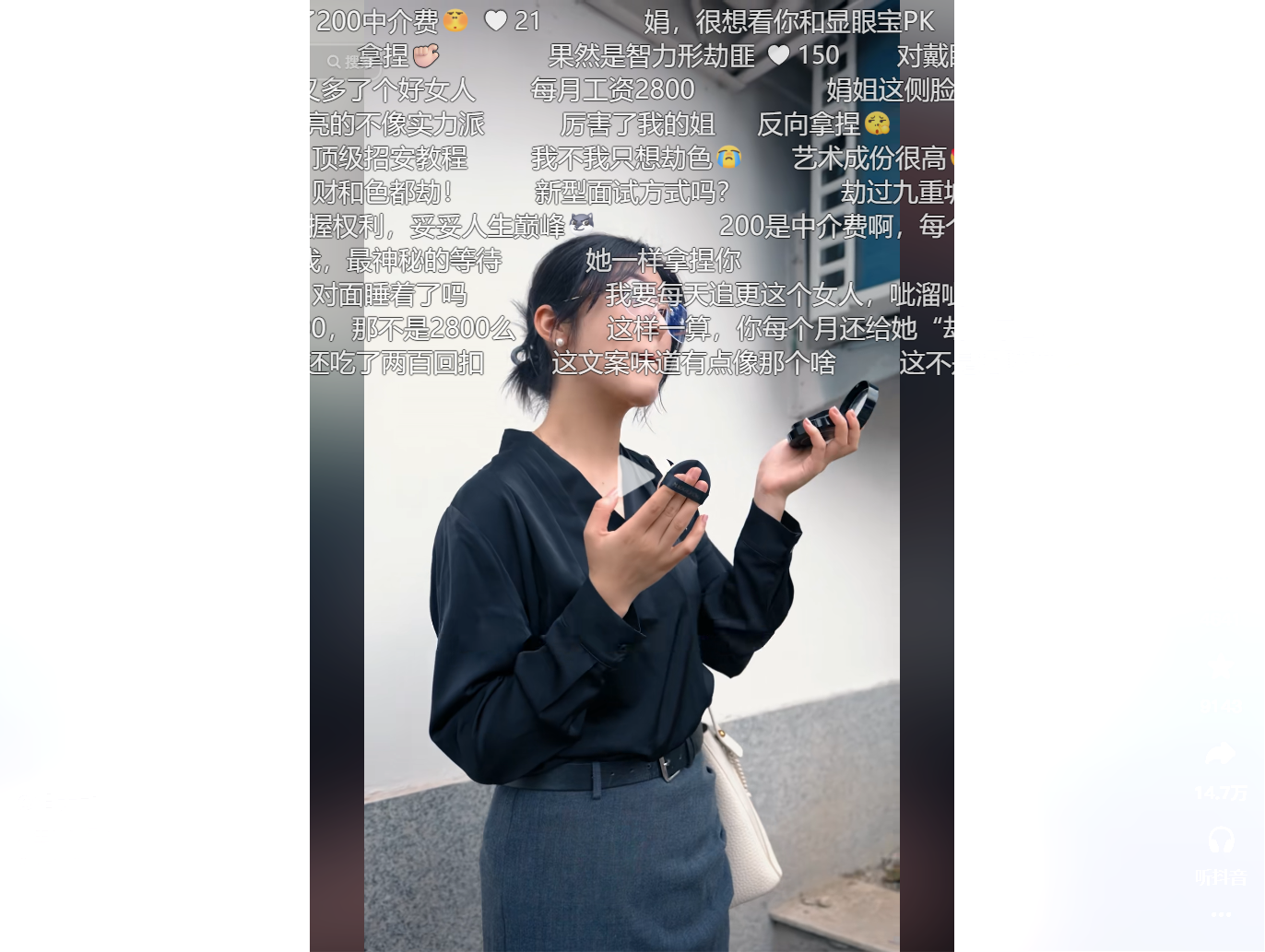
"She even kept a 200 yuan kickback, I'm crying to death 😭" This comment highlights the darkest layer of the satire. While the initial joke is about the low salary, the realization that the HR manager is actively skimming wages for personal cosmetics adds a visceral sting. It shifts the narrative from simple incompetence to systemic exploitation, resonating deeply with workers who suspect their compensation is being manipulated behind closed doors. The tearful emoji suggests a painful recognition of real-world workplace corruption disguised as administrative procedure.
"Translation: Hired a security guard for 2800, 9-to-5 shift" Viewers are treating the dialogue as a coded message that requires decoding, emphasizing the gap between corporate speak and reality. This per
spective strips away the comedic veneer to reveal the bare economic transaction. By framing the robbery-to-hiring pipeline as a direct translation, the audience underscores how normalized low-wage labor has become. The humor lies in the blunt reduction of a dramatic crime scene to a standard, underpaid employment contract.
"Robber: I... I think I've been recruited" This viewpoint focuses on the identity crisis and the sheer speed of assimilation. The term "recruited" (or historically "amnestied") implies a surrender to a superior force. It suggests that the stability of a steady paycheck, however meager, is paradoxically more compelling than the high-stakes risk of crime. This reflects a collective exhaustion with economic precarity, where even a fictional criminal prefers the predictable oppression of a 9-to-5 job over the freedom of outlawry.

Comment Section Vibe
The comment section feels like a digital watercooler where laughter serves as a coping mechanism for shared economic anxiety. There is a pervasive sense of wry resignation rather than outrage; users are not merely watching a skit but validating their own workplace traumas through collective humor. The tone is affectionately cynical, with many expressing admiration for the actress playing Sister Juan while simultaneously mourning the fictional robber’s fate. It is a space of high resonance where the boundary between entertainment and documentary blurs, creating a warm yet melancholic solidarity among those who understand that in this economy, getting robbed might actually offer better terms than getting hired.
As we navigate the midday rush this June 26, 2026, the Yunpoly editorial team extends our heartfelt gratitude to you for pausing to engage with this story. We understand that satire often hits closest to home, and your insightful reflections transform simple content into meaningful cultural dialogue. Thank you for bringing your wit, empathy, and lived experiences to our community; it is your perspective that gives these stories their true weight and warmth.