Introduction
A viral video featuring a Xinjiang student navigating mainland stereotypes has sparked widespread amusement and cultural dialogue. Blending humor with genuine insight, it transforms awkward questions about dancing and long names into a heartwarming bridge between diverse Chinese communities.
What It's About
The video centers on Anian, whose full name is Abduhmet Yasenjan, recounting his first experiences attending university in mainland China. With a relaxed and humorous tone, he addresses the barrage of stereotypical questions he faces, ranging from whether he commutes by horse to if every Xinjiang resident can perform traditional neck dances or roast lamb skewers. The content brilliantly juxtaposes these exoticized expectations against the mundane reality of student life, creating an atmosphere that is both comedic and deeply humanizing. Rather than expressing frustration, Anian uses wit to dismantle misconceptions, turning potential cultural friction into moments of connection. The narrative also touches upon the logistical marvel of traveling from Xinjiang to Haikou for school—a diagonal journey across the country—and the linguistic nuances of explaining why "Xinjiang dialect" is not a monolithic concept. Ultimately, the video serves as a gentle educational tool, replacing fantasy with authentic personal experience while celebrating regional identity through laughter rather than lecturing.

"I'm curious, do ID cards have very long names?" This seemingly simple query opens a fascinating window into administrative and cultural adaptation. Beyond mere curiosity about bureaucracy, this comment reflects a broader fascination with how ethnic minority identities are encoded within national systems. It sparks discussions about the practicalities of daily life for Uyghur citizens, moving beyond aesthetic stereotypes to acknowledge the tangible realities of living at the intersection of distinct naming traditions and standardized documentation. The ensuing conversation reveals a public eager to understand the mechanics of multicultural coexistence rather than just its visual symbols.
"Who can tell me what regions 'mainland' generally refers to?" This question highlights a surprising geographical ambiguity that resonates far beyond the video's immediate context. It exposes how the term "neidi" (mainland) is fluid and perspective-dependent; for
some coastal residents, Xinjiang itself is considered part of the interior, while others jokingly claim Xinjiang is the true center of Asia. This debate underscores that regional identity in China is not fixed but relational, shaped by individual vantage points. The discussion evolves into a collective re-mapping of mental geography, challenging viewers to reconsider their own spatial assumptions.
"Don't ask, everyone from Xinjiang is uniformly called Maimaiti." While intended as humor, this comment inadvertently reveals the persistence of reductive labeling even among well-meaning audiences. It serves as a critical counterpoint to the video’s mission, illustrating the exact stereotype Anian seeks to complicate. However, the community’s response to this remark often pivots toward education, with many users correcting the misconception and explaining the meaning and diversity of Uyghur names. This dynamic demonstrates how online spaces can function as self-correcting forums where initial oversimplifications become catalysts for deeper cultural literacy.
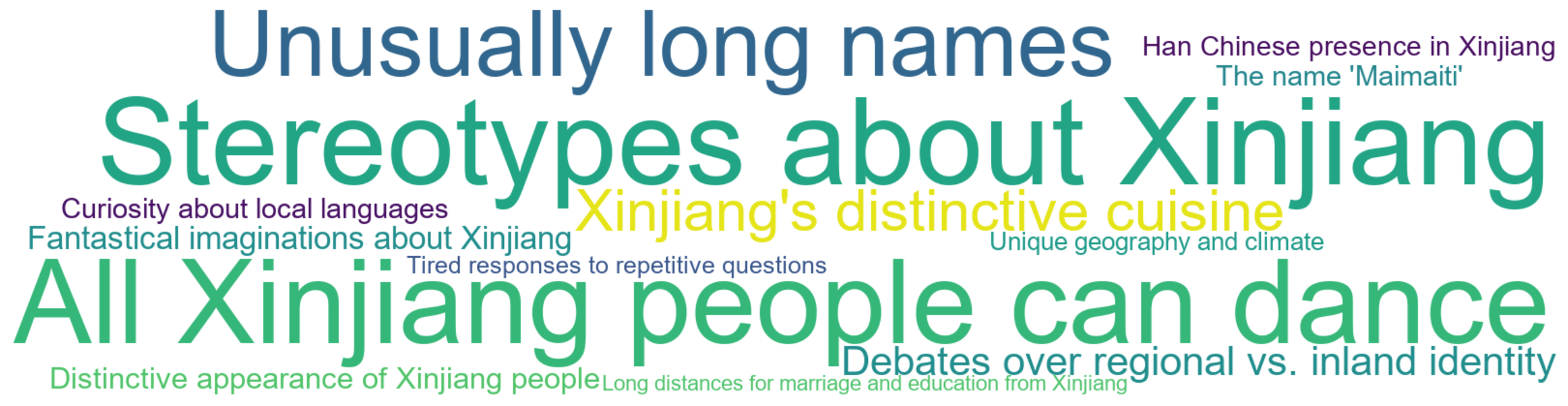
Comment Section Vibe
The comment section radiates a warm, convivial energy akin to a lively dormitory common room where strangers bond over shared curiosity. There is an overwhelming sense of affectionate teasing mixed with genuine respect, as viewers oscillate between playful jokes about camel licenses and sincere inquiries about climate adaptation. While traces of ingrained stereotypes surface, they are swiftly met with gentle corrections and empathetic explanations, creating a self-regulating ecosystem of mutual learning. The emotional trajectory moves from lighthearted amusement to reflective appreciation, leaving readers with a palpable sense of cross-cultural camaraderie rather than division. Controversy is notably absent; instead, there is a collective willingness to laugh together while quietly expanding one another’s horizons.
As we approach the quiet hours of this summer evening, the yunpoly editorial team extends heartfelt thanks to our readers for engaging with such openness and warmth. Stories like Anian’s remind us that understanding begins not with grand declarations, but with humble questions asked in good faith. We are grateful for your continued trust and for fostering a space where curiosity is honored and differences are celebrated with kindness. Wishing you all a peaceful night and many more moments of joyful discovery.